

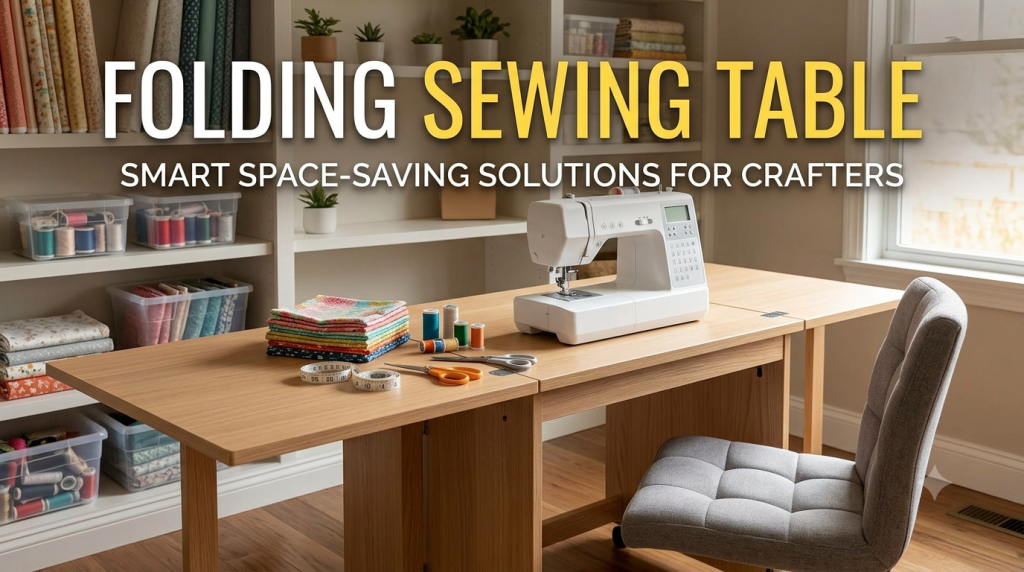
For the modern sewer, quilter, or crafter, space is often the most precious commodity. Whether you live in a cozy apartment, a shared dorm room, or simply have a household that requires the dining room table to be used for, well, dining, finding a dedicated spot for your creative endeavors can feel like an impossible puzzle.
Enter the unsung hero of the craft world: the folding sewing table.
Gone are the days of heaving a heavy sewing machine from the closet to the kitchen counter, only to pack it all away an hour later. The folding sewing table has revolutionized how we interact with our craft, offering a perfect blend of functionality, durability, and convenience. In this comprehensive guide, I will explore everything you need to know about these versatile pieces of furniture—from the benefits and key features to the top models and crucial buying tips.

Quick Navigation Menu
Why You Need a Folding Sewing Table
Types of Folding Sewing Tables
Key Features to Look for in a Folding Sewing Table
Should You Build Your Own Folding Sewing Table?
Ergonomics and Setup: Getting the Most Out of Your Table
Maintaining Your Folding Sewing Table
Overcoming Common Hurdles with Folding Tables
Beyond Sewing: Other Uses for Your Folding Table
The Cost of a Folding Sewing Table
Conclusion: Is a Folding Sewing Table Worth It?
Frequently Asked Questions (FAQs)
Why You Need a Folding Sewing Table
If you are still balancing your sewing machine on the edge of a folding card table or, worse, the floor, it is time to upgrade your setup. Here is why a specialized folding sewing table is a game-changer.
- The Space-Saving Superpower
The most obvious benefit is in the name: folding. These tables are designed to be used and then stowed away. When folded, they can slip behind a door, slide under a bed, or fit neatly into a closet. This allows you to reclaim valuable floor space in your home, keeping your living areas clutter-free and multipurpose.
- Ergonomic Health
Sewing on a standard table often leads to a “hunched” posture. Standard dining tables are generally too high, forcing you to raise your shoulders and strain your neck. Conversely, a standard desk can be too low, causing back pain. Folding sewing tables are specifically engineered to be the correct height for sewing—usually around 29 to 30 inches—allowing you to sit with your arms at a 90-degree angle and your feet flat on the floor. This ergonomic alignment prevents the aches and pains associated with long sewing sessions, allowing you to create for hours comfortably.
- Surface Area and Drop-In Functionality
A standard table doesn’t accommodate the thickness of a sewing machine base, often leaving the machine perched awkwardly. High-quality folding sewing tables feature a “drop-in” or “cut-out” section. This allows you to lower your sewing machine so the bed of the machine sits flush with the table surface. This creates a vast, flat extension table, making it significantly easier to handle large quilts, curtains, or heavy fabrics. It keeps the fabric level as it moves through the machine, preventing drag and ensuring precise seams.
- Portability
Since they fold up, these tables are incredibly portable. If you attend quilting retreats, sewing classes, or crop parties, a folding sewing table can be transported easily in the back of an SUV or large car. You no longer have to use unfamiliar, rickety tables at a retreat; you can bring your perfect setup with you.
- Multi-Purpose Use
While designed for sewing, these tables are incredibly versatile. When not used for crafting, they function as excellent standing desks, buffets during parties, homework stations for kids, or even as an extra prep station in the kitchen. The folding capability means they are ready to adapt to your changing needs.
STOP Settling for “Good Enough” Your Sewing Deserves Better! Here’s How to Create Clothes That Fit Like They Were Made Just for You…
Types of Folding Sewing Tables
Not all folding tables are created equal. Depending on your specific needs—whether you are a quilter who needs a massive surface or a garment sewer who focuses on precision—there is a specific type of folding table for you.
The Standard Drop-Leaf Table
This is the most common type. It features a main center section with one or two side leaves that drop down when not in use. Usually, these are supported by folding legs. The center section often contains the drop-in section for the machine. Check Them Out Here On Amazon.
- Best for: Beginners, casual sewers, or those with very limited storage space.
- Pros: Lightweight, affordable, very compact when folded.
- Cons: Less sturdy than heavy-duty options; may wobble if the machine is heavy.
The Rolling/Large Surface Folding Table
These are the “SUVs” of the sewing table world. They are larger, often featuring a fold-out extension on one or both sides to support large quilts. They usually come with locking casters (wheels), making them easy to move around the room. Check Them Out Here On Amazon.
- Best for: Quilters, long-arm machine users, or those who work with large volumes of fabric.
- Pros: Massive surface area, high weight capacity, easy to move.
- Cons: Heavier, requires more storage space, and is more expensive.
The “Hideaway” or Sewing Center
This is a hybrid. It is a folding table that comes with a “cabinet” top. When closed, it looks like a storage chest or a small cabinet. When opened, the top flips up and the machine platform rises to meet it. Here’s a Great Hideaway Sewing Center On Amazon.
- Best for: People who don’t want their craft supplies visible and prefer a sleek, aesthetic storage solution.
- Pros: Incredibly space-efficient; hides the machine; offers built-in storage.
- Cons: Very expensive; the workspaces are often narrower than large folding tables.
The Tabletop Folding Extension
If you already have a desk but need more room, this is a great option. It’s a folding platform that sits on top of your existing desk to extend the surface area around your machine. Find What Your Looking For On Amazon Here.
- Best for: People who have a sturdy desk but need a larger work surface specifically for quilting.
- Pros: Cheapest option; takes up little storage space.
- Cons: Doesn’t fix ergonomic height issues; you still have to adjust your chair height.
Key Features to Look for in a Folding Sewing Table
When shopping for your ideal table, look beyond the price tag. The materials and design determine how long the table will last and how much you enjoy using it.
- The “Drop-In” System
This is non-negotiable. Ensure the table has a removable panel that allows the machine to drop down. The thickness of this platform matters. Many cheap tables use a “lip” system that merely supports the edges of the machine, which can be unstable. High-end tables use a recessed platform that the machine nests into securely.
- Weight Capacity
A standard home sewing machine weighs between 15 and 30 pounds, but heavy-duty machines or embroidery machines can weigh upwards of 50 pounds. Check the table’s weight capacity. You don’t want the table buckling under the weight of the machine, and you certainly don’t want it collapsing when you push a heavy quilt through.

- Material and Build Quality
- Wood/Composite: Most folding tables are made from MDF or particleboard with a melamine laminate finish. This is durable, easy to clean, and heavy enough to stay stable. Look for thick boards (at least 15mm) to prevent bowing.
- Metal/Steel: The legs should be made of steel, not flimsy aluminum or cheap plastic tubes. Powder-coated steel is best as it resists rust and scratches.
- Folding Mechanism
The locking mechanism of the legs is crucial. You need legs that lock into place firmly to prevent the table from folding up while you are sewing. Look for “positive locking” hinges or spring-loaded triggers.
- Storage and Accessories
Does the table have built-in storage drawers or shelves? Some premium tables come with sliding trays for thread, rulers, and scissors. While this adds to the cost, it keeps your tools within arm’s reach and reduces clutter on the tabletop.
Turn “ALMOST RIGHT” into “ABSOLUTELY PERFECT” Learn the secrets to better-fitting clothes today!
Should You Build Your Own Folding Sewing Table?
For the ambitious DIY-er, building your own folding sewing table can be a tempting prospect. You can customize the size, shape, and height perfectly.
Pros of DIY
- Total Customization: You can make it the exact width you need.
- Cost: You can potentially build it cheaper than buying a high-end brand.
- Satisfaction: Nothing beats using something you built with your hands.
Cons of DIY
- Material Cost: In 2024, wood and hardware are expensive. Buying a sheet of high-quality plywood, piano hinges, steel legs, and locking wheels often ends up costing as much as buying a pre-made table.
- Time Investment: Unless you are a skilled woodworker, the “folding” mechanism aspect is tricky to get right.
- Aesthetics: It is difficult to get a melamine-laminate finish in a home shop, meaning your DIY table might not look as polished or be as easy to clean as a commercial one.
Verdict: Unless you have a specific size requirement that doesn’t exist on the market, it is usually more cost-effective and time-efficient to buy a folding sewing table.
Ergonomics and Setup: Getting the Most Out of Your Table
Buying the table is only half the battle. Setting it up correctly is vital for your health and productivity.
- Chair Height
With a folding table, the height is usually fixed. Therefore, your chair must be adjustable. Sit on your chair and place your feet flat on the floor. Your knees should be level with or slightly lower than your hips. When you place your hands on the sewing table, your forearms should be parallel to the floor or slightly sloping downward. See Sewing Chairs On Amazon Here.
- Lighting
A table is just a surface; you need light to see your work. Place your table near a natural light source or invest in a high-quality daylight lamp. Many folding tables have a “lip” on the side—this is often designed to clamp a magnifying lamp. Check Out This Clamp On Sewing Light On Amazon.
- Organization
One of the biggest mistakes sewers make is turning their new, spacious table into a dumping ground. Keep your table clear. Use the drop-in storage trays (if included) for your thread, or use an over-the-door organizer for your scissors and tools.
- The “Drop-In” Fit
Take the time to adjust the drop-in insert to fit your machine. If the machine sits too high, the table is useless. If it sits too low, the needle plate will be below the surface, causing fabric to drag. There are usually adjustment screws to get the needle plate exactly flush with the tabletop.
Maintaining Your Folding Sewing Table
Investing in a good table means you want it to last. Here is how to keep it in top condition.
- Clean Regularly: Wipe down the laminate surface with a damp cloth and mild soap. Never use abrasive cleaners, as they will dull the finish.
- Lubricate Joints: If the folding hinges start to squeak, apply a tiny drop of WD-40 or sewing machine oil to the pivot points.
- Check Screws: The vibration of your sewing machine can slowly loosen the screws over time. Once a month, check the tightness of the leg bolts and the hinges.
- Weight Management: Do not lean or put heavy weight on the drop-in leaf. The insert is designed to hold the machine, not your body weight.
Overcoming Common Hurdles with Folding Tables
While folding tables are amazing, they do come with some challenges. Here is how to handle them.

Problem: The Table Wobbles
Solution: This is usually because the legs aren’t locked properly. Ensure the locking braces are fully extended and snapped into place. If the legs have adjustable feet, twist them until they firmly contact the floor. If the floor is uneven, you may need a furniture shim.
Problem: The Fabric Drags
Solution: If you feel your fabric is sticking to the table, you can use a “Teflon sheet” or a “sliding mat” on the table surface. Alternatively, you can wax the table surface with a furniture polish to reduce friction. Make sure your machine sits flush; if it is too low, the fabric will hit the lip of the hole, causing drag.
Problem: My Table is Too High/Low
Solution: It is difficult to alter a folding table’s height, but you can manage it with your chair. If the table is too high, raise your chair and use a footrest. If the table is too low, get a lower chair. If you are tall and the table is too low, you can purchase bed risers to place under the legs, but be careful—this can make the table unstable.
Beyond Sewing: Other Uses for Your Folding Table
When your sewing machine is packed away, don’t let the table gather dust. Its sturdy surface and portability make it perfect for other activities.
- Standing Desk: With a laptop or a book, it creates a perfect standing work surface.
- Scrapbooking: The large, flat surface is ideal for laying out 12×12 scrapbook paper.
- Puzzle Station: Leave a jigsaw puzzle out without taking over the dining table.
- Indoor Plant Station: Use it to start seeds or repot plants (make sure to use a tarp!).
- Picnic/Party Table: The portability makes it easy to set up extra serving space for barbecues and parties.
The Cost of a Folding Sewing Table
A quick note on pricing to help you budget. The market is generally split into three tiers:
- Budget (Under $100): These are usually generic folding tables or tabletop extensions. They may not have a drop-in section and are often lightweight plastic or thin wood. Ideal for: Light use, kids’ tables, or basic hand-sewing.
- Mid-Range ($100 – $300): This is the “sweet spot.” You get steel legs, a functional drop-in, and extension leaves. Most D-Craft and entry-level Arrow models fall here.
- High-End ($300 – $800+): These are the premium Jamestown and Sauder models. They offer industrial strength, heavy casters, beautiful finishes, and complex folding mechanisms. Ideal for: Professional use or daily long hours.
Conclusion: Is a Folding Sewing Table Worth It?
To put it simply: Absolutely. A folding sewing table is more than just a piece of flat-pack furniture; it is an investment in your health, your productivity, and your happiness.
We often spend thousands of dollars on our sewing machines, fabric, and accessories, but we neglect the foundation on which we build our craft. A rickety table leads to inaccurate seams and frustration. A too-high table leads to shoulder pain that can end a sewing session early.
By investing in a folding sewing table, you are giving your craft the respect it deserves. You are creating a space that is solely yours—a sanctuary where you can create, experiment, and relax. Whether you choose the budget-friendly option to get started or splurge on a high-end quilter’s station, the folding sewing table is the key to unlocking your potential.
So, measure your space, assess your needs, and make the leap. Your back, your fabric, and your finished projects will thank you. Happy sewing!
Frequently Asked Questions (FAQs)
Q: How much weight can a folding sewing table hold?
A: It depends on the model. Budget tables hold around 30-50 lbs, while high-end tables support up to 150 lbs or more. Always check the product specifications.
Q: Can I use my sewing machine on a regular folding table?
A: You can, but it is not recommended. Regular tables are too high or too low, causing ergonomic issues. They also lack the drop-in feature, which makes handling fabric much harder.
Q: How do I install the drop-in insert for my specific machine?
A: Most tables include a universal insert. You mark the outline of your machine’s base on the insert, cut it out (usually with a jigsaw), and place the machine inside the cut-out.

Q: Are folding sewing tables easy to fold up?
A: Yes, most are designed for one-person operation. Usually, you unlock the legs, push the side leaves down, and fold the main table in half.
Q: What is the difference between a “leaf” and an “extension table”?
A: A “leaf” is a built-in part of the folding table that folds down against the side. An “extension table” is a separate piece that attaches to the machine itself, usually extending the bed of the sewing machine. Many folding tables have leaves to support the extension table.
Q: I am tall (over 6 feet). Are there height adjustments?
A: Some premium models offer adjustable legs. If not, you can use bed risers (though they reduce stability) or use a lower chair with a footrest.