
You’ve found the perfect fabric. You’ve chosen a stunning pattern. You’re ready to sit down at your sewing machine and create something beautiful. But then… you’re faced with the wall of options: needles and threads. It’s easy to grab whatever is on sale or already in your drawer, but this small choice can make or break your project.
Using the wrong needle or thread can lead to a nightmare of skipped stitches, puckered seams, broken threads, and even permanent damage to your fabric. The right combination, however, creates a strong, beautiful, and professional-looking finish.
Consider this your ultimate guide to clarifying these essential tools. Let’s thread the needle on this topic once and for all!

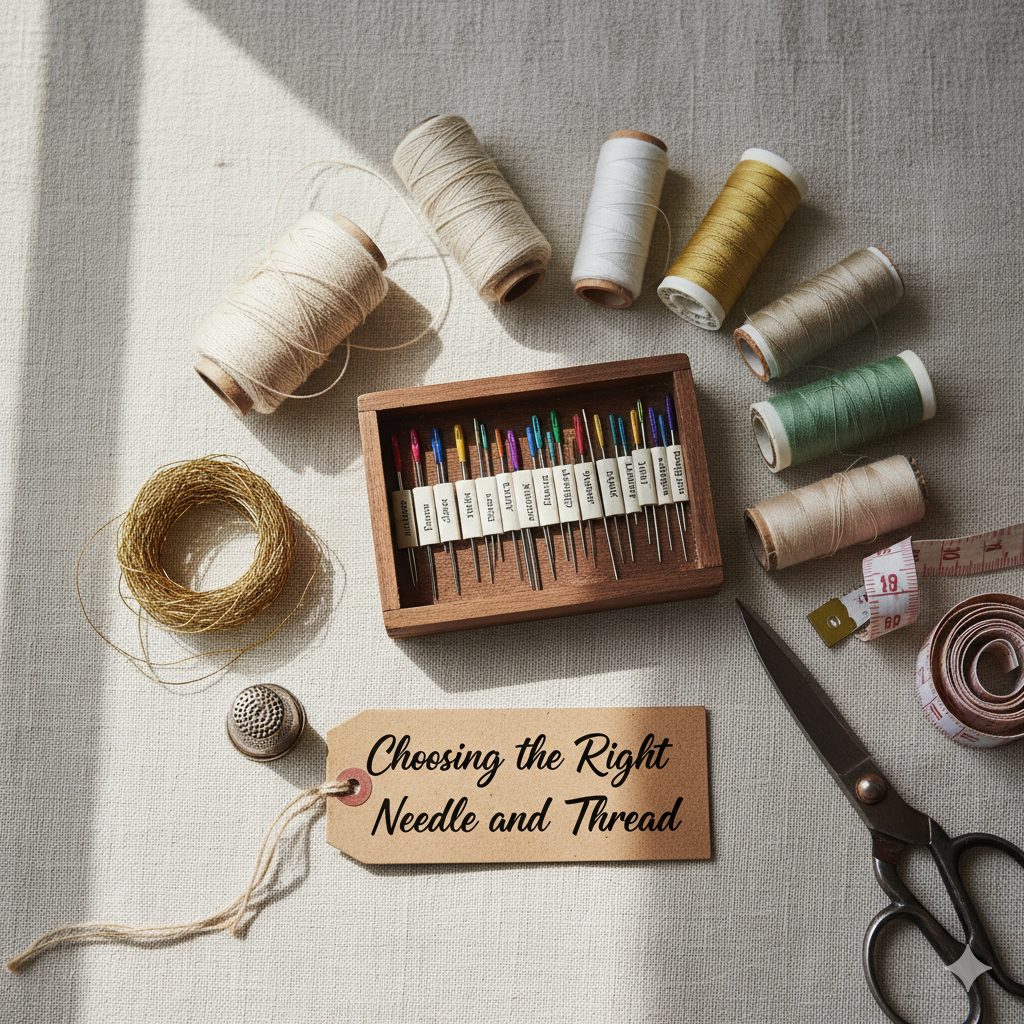
Choosing the Right Needle and Thread
Quick Navigation Menu
Choosing the Right Needle and Thread
Types of Needle and Thread Kits
What to Look for in a Good Quality Kit
Top Brands and Product Recommendations
Where to Buy Needle and Thread Kits
Needle and Thread Essential Vocabulary
Part 1: The Needle – The Unsung Hero of Sewing
The needle is your direct line to the fabric. Its job is to pierce the material cleanly and carry the thread through to form a stitch without causing damage.
Understanding Needle Anatomy & Sizing
Shank: The top part that is inserted into your machine. It’s rounded on one side and flat on the other—make sure the flat side is facing the back when you insert it.
Shaft: The long body of the needle. The thickness of the shaft determines the needle size.
Eye: The hole the thread passes through. Larger needles have larger eyes to accommodate thicker threads.
Point & Tip: The business end! The shape of the point is designed for specific fabrics.
Groove: A small channel on the front of the needle that helps shield the thread as it plunges into the fabric.
Needle Sizes: Needle sizes are listed in both European (e.g., 70, 80, 90, 100) and American (e.g., 10, 12, 14, 16) numbering. The general rule is: the lighter the fabric, the smaller the number; the heavier the fabric, the larger the number.
– Fine fabrics (chiffon, silk): Size 60/8 or 70/10
– Lightweight (cotton voile, linen): Size 80/12
– Medium weight (quilting cotton, linen, poplin): Size 90/14 (the most common all-purpose size)
– Heavy (denim, canvas, upholstery): Size 100/16 or 110/18

A Guide to Needle Types
This is where the magic happens. Each needle type is engineered for a specific task.
Universal: Your go-to for wovens and knits. The point is slightly rounded, making it a good compromise for many projects, but not perfect for delicate or technical fabrics.
Ballpoint/Jersey: Designed for knits and stretch fabrics. The rounded tip pushes between the fabric fibers instead of piercing them, preventing runs and holes.
Sharp/Microtex: Has a very sharp, thin point for piercing tightly woven fabrics like microfiber, silk, taffeta, and laminated fabrics. Excellent for achieving precise, clean seams.
Denim/Jeans: Features a sharp point and a stiff shaft to handle dense, heavy fabrics like denim, canvas, and duck cloth. Prevents skipped stitches and breaking.
Leather: Has a chisel-like point that actually cuts through the leather or faux leather for a clean stitch. (Never use on woven or knit fabrics!).
Embroidery: Has a larger, deeper eye and a special scarf to prevent shredding and breaking of delicate embroidery threads.
Topstitching: Has an extra-large eye and a deep groove to accommodate heavy topstitching thread.
Quilting: Has a tapered point for easily piercing through multiple layers of fabric and batting.
Pro Tip: Change Your Needle! A dull or slightly bent needle is the cause of many sewing problems. Get in the habit of changing your needle every 8-10 hours of sewing time, or at the start of every new project.
Part 2: The Thread – The Strength of Your Seam
Thread is what holds everything together. Its weight, fiber content, and quality determine the durability and appearance of your finished piece.
Understanding Thread Weight
Thread weight can be confusing. The rule is: the higher the number, the finer the thread. A 40-weight thread is thicker and stronger than a 50-weight thread.
All-Purpose (40wt or 50wt): Your everyday thread. Strong and versatile for both machine sewing and hand sewing on a wide variety of fabrics.
Embroidery (30wt or 40wt): Has a slight sheen and is designed to be visible. It’s softer and flows smoothly through fabric for decorative stitches.
Topstitching (30wt or 12wt): Thick and decorative, meant to be a prominent design feature. Requires a topstitching or large-eye needle.
Bobbin & Invisible (60wt – 100wt): Very fine threads. Bobbin thread is used in machine embroidery to reduce bulk. Invisible thread (monofilament) is clear or smoke-colored and blends into fabric.
Heavy-Duty (20wt – 30wt): Extra strong for sewing heavy fabrics like denim, upholstery, and canvas.

A Guide to Thread Fiber Types
Polyester: The most common all-purpose thread. It has a slight stretch, making it excellent for knits, and is strong and colorfast. A great choice for most modern fabrics.
Cotton: A natural, matte-finish thread that is perfect for sewing on woven cotton fabrics and for quilting. It has no stretch and can break down over time if exposed to the elements, so it’s not ideal for garments that need durability or stretch.
Cotton-Wrapped Polyester: A core of polyester wrapped in cotton. It offers the strength of polyester with the heat-resistant, natural feel of cotton. A popular choice for quilting.
Nylon: Incredibly strong and elastic. Primarily used for stretch fabrics and swimwear. It can be damaged by high heat and sunlight.
Silk: A luxurious, strong, and fine thread with a beautiful sheen. It’s excellent for delicate fabrics like silk and wool, for basting, and for hand-sewn buttonholes as it glides through fabric effortlessly.
Pro Tip: Quality Matters! Cheap thread is often fuzzy, uneven, and coated with waxes that can gunk up your machine. Invest in good-quality thread from reputable brands (like Gutermann, Mettler, Coats & Clark) for smoother sewing and fewer headaches.
Part 3: The Perfect Pairing – A Quick Reference Guide
Now, let’s put it all together. Here’s how to match your tools to your project.
For quilting cotton and other medium-weight wovens, a Universal 80/12 needle paired with All-Purpose 40wt polyester thread is your perfect, reliable combination.
When working with delicate silks or chiffon, switch to a fine Sharp/Microtex 70/10 needle and a fine polyester or silk thread to prevent snags and achieve a clean stitch.
Sewing a t-shirt or jersey knit requires a Ballpoint 80/12 needle to navigate the stretch fibers without damaging them, and All-Purpose polyester thread for its flexibility and strength.
Tackling denim demands a sturdy Denim 90/14 or 100/16 needle to penetrate the thick layers. Pair it with a strong All-Purpose or Heavy-Duty polyester thread.
For leather or vinyl, you must use a Leather 90/14 needle with its cutting point, along with heavy-duty polyester or topstitching thread for durable seams.
If you’re creating decorative buttonholes or topstitching, a Topstitching 90/14 needle with its large eye is essential to smoothly guide thick 30wt topstitching thread.
And for machine embroidery, always use an Embroidery 75/11 needle designed to protect your specialty 40wt embroidery thread from shredding.

Final Stitching Thoughts
Taking a few extra moments to select the correct needle and thread is the secret weapon of professional sewists. It elevates your craft from “homemade” to “handmade with care.”
Keep a variety pack of needles on hand and build a thread collection in colors you use often. Your sewing machine—and your finished projects—will thank you for it!
Now that you’re armed with this knowledge, what project will you start with?
Types of Needle and Thread Kits
Kits are generally designed for specific purposes. The main categories are:
1. Basic Sewing/Mending Kits:
These are the most common and are designed for everyday repairs on clothing, buttons, and household items.
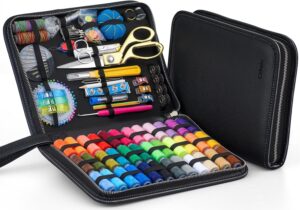
Typical Contents: Assorted needles (sharps, betweens, darners), a basic color palette of threads (black, white, navy, beige, red), straight pins, a pin cushion, scissors, seam ripper, and threader. Often comes in a small, portable tin or vinyl pouch.
2. Travel/Small Emergency Kits:
Extremely compact and designed to fit in a suitcase, glove compartment, or desk drawer for quick fixes on the go.
Typical Contents: A few basic needles, mini spools of the most essential thread colors (black, white), a couple of buttons, and a tiny scissors or blade. Often in a tiny tin or plastic case.
3. Embroidery/Cross-Stitch Kits:
These are for decorative stitching and contain specialized tools.
Typical Contents: Embroidery needles (with larger eyes for thicker floss), a full spectrum of colored embroidery floss (often on organizers called bobbins), embroidery hoops, sharp scissors, and fabric. The needles and thread are the star of the show here.
4. Heavy-Duty/Upholstery Kits:
Designed for tougher materials like denim, canvas, leather, and upholstery fabric.
Typical Contents: Heavy-duty needles (like leather or denim needles), stronger thread (e.g., upholstery or topstitching thread), a thimble, and sometimes awls or palm guards.
What to Look for in a Good Quality Kit
Not all kits are created equal. Here’s what separates a great kit from a frustrating one:
Needle Variety: A good kit shouldn’t just have 10 of the same needle. Look for assorted sizes (e.g., fine for silk, thick for denim) and types (sharps, embroidery, darners for mending holes).
Thread Quality: This is crucial. Cheap thread is fuzzy, breaks easily, and can shed. Look for brand-name thread like Coats & Clark, Gutermann, or Mettler. A good basic palette includes: Black, White, Navy, Cream/Beige, Brown, Gray, and Red.
Scissors: Flimsy scissors can ruin your experience. Ensure they are sharp and made of decent stainless steel.
Extras: Useful additions include a seam ripper, tape measure, thimble, needle threader, and a pin cushion (with quality pins that have sharp points and glass or metal heads, not plastic bubbles).
Case Quality: A sturdy, hard-sided tin or a well-stitched zippered pouch will keep everything organized and portable.
Top Brands and Product Recommendations
 For Beginners & General Use:
Dritz Sewing Kit: A very popular and reliable choice. They offer kits in various sizes, from small travel tins to large comprehensive cases. The quality is consistent for the price.
Simplicity Starter Kit: Another good, widely available brand for basic mending.
For Better Quality & Hobbyists:
Clover and Prym: These brands offer high-quality tools. You might pay a bit more, but the scissors are sharper, the needles are smoother, and the thread is better.
Assembling Your Own Kit: This is often the best option. Buy a empty sewing box or organizer and fill it with your preferred brand of thread (Gutermann is a fan favorite), a curated set of needles (John James needles are excellent), and quality tools like Gingher or Fiskars scissors.
For Embroidery:
DMC and Dimensions offer fantastic starter kits that include a pattern, fabric, hoop, needle, and the exact colors of floss you need.
Where to Buy Needle and Thread Kits
Craft Stores: Michaels, Joann Fabrics, Hobby Lobby have the largest selection.
Online: Amazon is a hub for every type of kit imaginable. Etsy is great for unique, hand-assembled, or vintage kits.
Big Box Stores: Walmart, Target usually carry basic Dritz or Simplicity kits.
Specialty Shops: Local fabric or quilting stores will have high-end tools and kits.
Check out Amazon’s Full Line of Needle and Thread Kits Here
Needle and Thread Essential Vocabulary
Sharps: Standard sewing needles for general purpose sewing.
Betweens: Shorter needles used for detailed hand quilting and fine sewing.
Embroidery/Crewel Needles: Have a longer eye to hold multiple strands of embroidery floss.
Darners: Long needles with a large eye, used for mending holes in fabric (darning).
Embroidery Floss: Thread made of six separable strands, used for decorative stitching.
All-Purpose Thread: The standard thread used for sewing and mending most fabrics.
I hope this helps you find the perfect needle and thread kit for your needs! Whether you’re fixing a torn seam or starting a new hobby, a good kit makes all the difference.
Related Reading
17 Sewing Tools You’re Not Using (But Should Be)
8 Little Sewing Secrets That No One Tells Beginners
How to Save Money on Fabric and Supplies
Common Sewing Mistakes and How to Avoid Them
How to Cover Up Sewing Mistakes