

Sewing is a rewarding and creative hobby, but anyone who’s spent time at the fabric store knows how quickly the costs can add up. From fabrics and patterns to tools and accessories, even small projects can start to feel expensive. The good news is that with a little planning and some smart strategies, you can stretch your sewing budget without sacrificing quality or creativity.
Whether you’re a beginner looking to build your skills or an experienced sewist tackling big projects, there are plenty of ways to save money along the way. By rethinking how you source materials, choosing the right tools, and making the most of what you already have, you’ll not only keep costs down but also discover new inspiration for your sewing journey. In this post, I’ll explore practical tips to help you enjoy your projects while staying budget-friendly.
Quick Navigation Menu
7 Ways to Save On Your Sewing Projects
Where to Find Savings On Sewing Supplies
10 Tips for Saving Money On Fabrics
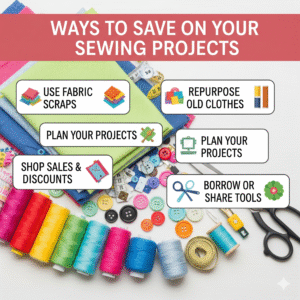
7 Ways to Save On Your Sewing Projects
 1. The Golden Rule: Use What You Have
Before you buy anything new, shop your own stash!
Fabric Stash: Go through your existing fabric collection. You might have forgotten about a perfect piece for your next project.
Scrap Bin: Don’t underestimate scraps! They are perfect for small projects like patchwork, quilt blocks, pockets, appliqué, children’s clothes, hair accessories, or stuffing for pillows and toys.
Notions & Thread: Use up that odd-colored thread on basting stitches or internal seams. Go through your buttons, zippers, and elastics before purchasing new ones.
2. Smart Fabric Sourcing (The Biggest Expense)
Fabric is usually the largest cost, so savings here have the biggest impact.
Repurpose and Upcycle (The #1 Money Saver):
Thrift Store Finds: Look for large bedsheets, tablecloths, and curtains. A flat sheet can yield several yards of fabric for a fraction of the cost. Also, check the linen section for high-quality cottons and linens.
Clothing: Large dresses, skirts, and men’s shirts are great sources of fabric. A maxi skirt can become a new blouse. A man’s linen shirt can be transformed into a cute top for yourself.
Discover the joy of sewing without the stress or confusion! Sewing Pattern Secrets gives you clear instructions, beautiful designs, and everything you need to bring your ideas to life. Whether it’s fashion, crafts, or décor, you’ll have a world of projects at your fingertips. Start today and see how easy sewing can be – Click Here to Watch Video!
Old Projects: Don’t be afraid to “un-sew” (or carefully cut apart) old projects or clothes that don’t fit anymore to reuse the fabric.
Buy Strategically:
Sales and Clearance: Sign up for emails from your favorite fabric stores to get notifications about sales, especially holiday weekends and end-of-season clearances.
Remnants: Always check the remnant bin. These are leftover cuts sold at a significant discount, perfect for small projects or color-blocking.
Bulk Buying: If you find a fabric you truly love and will use often, buying a larger quantity (3+ yards) can sometimes be cheaper per yard.
Online Marketplaces: Check Etsy, eBay, and Facebook Fabric Swap groups. You can often find great deals, destash sales, and unique vintage fabrics.
Choose Fabric Wisely:
Start with Inexpensive Fabrics: When learning or making a muslin (a test version), use cheap cotton calico, muslin, or broadcloth instead of your expensive fashion fabric.
Avoid “Dry Clean Only” Fabrics: This adds a significant long-term cost to any garment you make. Stick to machine-washable fabrics to keep costs down.
3. Pattern Hacks and Savings
PDF Patterns: Many independent pattern designers sell PDFs you can print at home. They are often cheaper than printed patterns and go on sale frequently. Watch for “pattern collages” where you buy a bundle for a discount.
Sales at Big Box Stores: JoAnn, Hobby Lobby, and Michaels regularly have pattern sales for the “Big 4” companies (Simplicity, McCall’s, Butterick, Vogue) for as low as $1.99 or $2.99 each. Never pay full price for these patterns. Wait for the sales and stock up.
Free Patterns: There are thousands of free patterns and tutorials online for everything from tote bags to dresses. Blogs like Melly Sews, Craftsy, and The Spruce Crafts are great resources.
Learn to Draft Your Own: Use a well-fitting garment as a template to create your own patterns. There are many tutorials online for “rub-off” techniques.
Swap with Friends: Organize a pattern swap with your sewing friends. It’s a free way to get new patterns.
4. Notions and Thread Savings
Buy Generic: You often don’t need the most expensive brand-name thread for every project. Gutermann is excellent, but for basting and toiles, a cheaper polyester thread is fine. For the final project, quality thread does matter to prevent breakage and lint.
Buy in Bulk: For items you always use—like white and black all-purpose thread, basic pins, or machine needles—buying in multi-packs is cheaper per unit.
Turn your sewing dreams into reality – Click Here to unlock Sewing Pattern Secrets today!
Take Care of Your Tools:
Sharp Scissors: Dull scissors can chew up your fabric, leading to wasted material. Get them professionally sharpened instead of replacing them.
Clean Your Machine: A clean machine runs better, makes better stitches, and prevents costly repairs down the line.
Change Needles Regularly: A dull needle can snag and ruin your fabric, which is a waste of money. Change it after every 8-10 hours of sewing or at the start of a big project.
5. The Power of the Muslin (Toile)
This is a critical step for saving money on garment sewing.
A muslin is a test garment made from cheap fabric (like old bedsheets or muslin cloth).
It allows you to check the fit and make adjustments before you cut into your expensive fashion fabric.
This prevents the heartbreak and financial loss of making a beautiful garment that doesn’t fit. The small cost of the test fabric saves you from wasting a large amount of money.
6. Mindful Sewing Practices
Plan Your Layout: Carefully plan how you place your pattern pieces on the fabric to minimize waste. This is called “fussy cutting.” More efficient layout means you might be able to buy less fabric.
Save Everything: Buttons from worn-out shirts, zippers from old jeans, and elastic from old waistbands can all be salvaged and reused.
Learn to Repair: Don’t throw away a garment for a missing button, broken zipper, or ripped seam. Repairing it yourself saves the cost of replacing it.
7. Invest in Knowledge, Not Just Tools
YouTube University: There is a free tutorial for virtually every sewing technique imaginable. Learning how to do a French seam, install a zipper properly, or fit a bodice correctly will improve the quality and longevity of your makes, making them worth the cost.
Library Books: Before buying a expensive sewing book, check it out from your local library first.
Start Simple: Choose projects that match your skill level. A complicated project with expensive silk is a recipe for frustration and wasted money if you’re a beginner. Build your skills on simpler projects with more forgiving fabrics.
Get Instant Access: 150+ Easy Sewing Projects for Total Beginners!
Where to Find Savings On Sewing Supplies
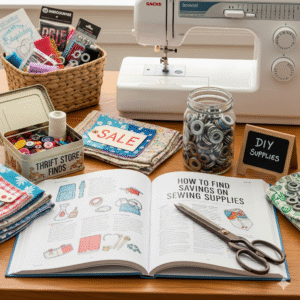 Finding savings on sewing supplies is a skill all its own. Here is a comprehensive guide to finding the best deals, organized from quick wins to more strategic approaches.
1. Online Retailers & Marketplaces
This is often the first stop for modern sewists. The key is to compare and watch for sales.
Amazon: Good for basic, common items (Gutterman thread, rotary blades, specific buttons). Use it for convenience and Prime shipping, but always compare prices with dedicated sewing sites, as Amazon isn’t always the cheapest.
Etsy: The best place for unique, small-batch, and vintage supplies.
Find: Rare vintage patterns, hand-dyed fabrics, artisan-made buttons, unique trims, and hand-printed PDF patterns from independent designers.
Savings Tip: “Favorite” shops you love; they often send coupons to admirers of their items or repeat customers.
eBay: Excellent for buying in bulk and finding discontinued or vintage items.
Find: Large lots of thread, zippers, or buttons sold by weight. Great for sourcing specific vintage patterns or hardware.
Savings Tip: Use the “Auction” format and snipe bids at the last second for the best deals on non-time-sensitive items.
Walmart & Amazon (for Basics): Don’t overlook them for ultra-cheap starter kits, basic thread, needles, and low-cost sewing tools. The quality may not be top-tier, but it’s fine for practice and beginners.
2. Dedicated Online Sewing Stores
These sites have massive inventories and frequent sales. Sign up for their newsletters—that’s where the best coupon codes are.
Joann: Their online prices often match in-store, and they constantly have 40-60% off one regular-price item coupons. Use this for a single, more expensive item like a cutting mat, ruler, or sewing machine accessory.
Mood Fabrics: Famous for their selection (thanks to Project Runway). They have a “Sale” section and occasional free shipping promotions.
Fabric.com (now back under Amazon): Often has competitive prices and good daily deals.
Wawak Sewing Supplies: A MUST-KNOW secret for professionals and serious hobbyists. They specialize in high-quality industrial supplies at unbeatable prices.
Find: Incredibly cheap thread (German-made), zippers by the dozen, scissors, pins, and machine needles. The savings on notions are staggering.
Nick of Time Textiles: Fantastic for high-end fashion fabrics at a deep discount. They sell “maker-ready” cuts and remnants from the fashion industry.
Fashion Fabrics Club: Good daily deals and a “Clearance” section with fabrics under $5/yard.
Online Shopping Tip: Always Google “[Store Name] coupon code” before checking out. RetailMeNot and Honey are great tools for this.
Unlock your creativity and start sewing like a pro with Sewing Pattern Secrets – the ultimate collection of step-by-step patterns and expert tutorials that make sewing fun, easy, and stress-free! Whether you’re a beginner or an experienced sewer, you’ll discover time-saving techniques and gorgeous designs that bring your projects to life. Don’t wait to turn your passion into stunning creations – Click here to get instant access to Sewing Pattern Secrets today!
3. Local Fabric & Craft Stores
Never underestimate the power of touching fabric before you buy and avoiding shipping costs.
Joann Fabrics: This is the hub for coupons.
Strategy: Download their app. The app consistently offers the best coupons, including 20-25% off your entire purchase, which includes sale items. This is your biggest weapon.
Shop their weekly ads and clearance aisles. Their remnants bin can yield fantastic deals on small projects.
Hobby Lobby: Their fabric section is 30% off every other week (rotate with other categories). If it’s not on sale this week, it will be next week.
Local Independent Fabric Stores: Support small businesses! They often have:
Knowledgeable staff who can offer advice.
Unique, high-quality fabrics you can’t find elsewhere.
A “sale room” or remnant bin.
Loyalty programs that offer points or discounts.
4. Thrift Stores, Charity Shops, & Estate Sales (The Treasure Hunt)
This is where the real magic happens for thrifty sewists.
Thrift Stores (Goodwill, Salvation Army):
– Bed Sheets & Tablecloths: High-quality cotton or linen for a fraction of the price per yard. Perfect for muslins (test garments) or actual projects.
– Clothing: Look for large skirts or dresses with enough fabric to repurpose. Also a great source for unique buttons and zippers you can harvest.
– Curtains: Heavy drapes can become upholstery fabric; light curtains can become linings or floaty garments.
– Estate Sales & Garage Sales: Often, you can find entire sewing stashes from someone who is downsizing or has passed away. Look for listings that mention “sewing,” “crafting,” or “fabric.”
Find: Vintage patterns, boxes of thread, jars of buttons, and unused fabric for pennies on the dollar.
5. Community Sources
Facebook Marketplace & Buy Nothing Groups: People often give away or sell entire fabric stashes for very low prices. Search for “fabric,” “sewing,” or “yarn lot.”
Local Guilds or Groups: Sewing groups often have fabric swaps where you can trade what you don’t need for something you do.
6. Strategic Buying & Mindset
Buy Generic for Notions: You don’t need name-brand pins or tape measures. Stores like Wawak or generic packs on Amazon are perfect.
Invest in Quality Tools Slowly: You don’t need the $100 shears on day one. Start with a decent pair and use a 50% off coupon at Joann to upgrade your most-used tools one at a time.
Shop Your Stash: Before you buy new fabric, look through what you already have. You might have forgotten about a perfect piece.
Use Coupons on Non-Fabric Items: The best use of a 40-60% off coupon is on a full-price item like a cutting mat, rotary cutter, or dress form, not on fabric that’s already on sale.
Sew faster, easier, and better with step-by-step patterns – Click here to get instant access!
10 Tips for Saving Money On Fabrics
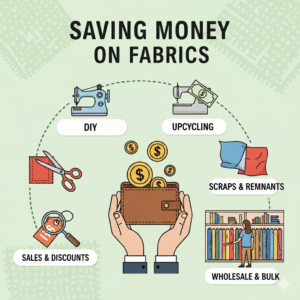 Here are 10 practical tips for saving money on fabrics for your sewing, quilting, and crafting projects.
1. Master the Art of the Stash Dive
Before you buy anything new, shop your own stash first. Organize your fabrics so you can easily see what you have. You might be surprised by the beautiful pieces you forgot about. Using what you already own is the most cost-effective method of all.
2. Befriend Your Local Thrift Store
Thrift stores are a treasure trove for fabric hunters. Look for:
Bed linens: Flat sheets offer a huge amount of continuous fabric for a few dollars, perfect for muslins (test garments), lining, or large projects.
Tablecloths & curtains: Often made from high-quality decorator fabrics.
Clothing: Large garments like maxi skirts, dresses, and men’s shirts can be deconstructed for fabric. A XXL men’s shirt can yield over two yards of material.
3. Wait for Sales and Use Coupons
Most major fabric stores (like Joann, Hobby Lobby, or local shops) have predictable sales cycles and offer coupons.
Download their apps: They almost always have 40-60% off one regular-price item coupons.
Watch for holiday sales: Memorial Day, Black Friday, and post-holiday sales often feature deep discounts.
Sign up for email lists to get notified of flash sales and clearance events.
4. Explore the “Remnant” Bin
Remnants are the end-of-the-bolt pieces that are typically sold at a significant discount (often 50% off or more). While the pieces are smaller (usually 1 yard or less), they are perfect for:
– Small projects like pockets, collars, cuffs, or quilting squares.
– dding a pop of a premium fabric you couldn’t afford at full price.
– Building a stash of various textures and colors.
5. Think Beyond the Fabric Store
Get creative with your sources:
Online Marketplaces: Websites like Etsy, eBay, and Facebook Marketplace are fantastic for finding people destashing their unused fabric collections, often at a fraction of the original cost.
Garage Sales & Estate Sales: You can find incredible deals, especially from sewists who are downsizing or from estates.
6. Buy from Online Retailers Specializing in Discounts
Some online stores have built their business model on selling designer and name-brand fabrics at a discount by buying overstock or deadstock.
Examples: sites like Fabric Mart Fabrics, Fashion Fabrics Club, or Cali Fabrics frequently have sales up to 70% off. Always check shipping costs, but the per-yard savings are often worth it.
7. Swap with Fellow Crafters
Organize a fabric swap with your sewing friends or local guild. Everyone brings fabrics they no longer love and leaves with “new-to-them” pieces. It’s free, social, and sustainable!
8. Invest in Muslin for Toiles
Never cut into your expensive fashion fabric without testing your pattern first. Make a test garment (a “muslin” or “toile”) using cheap muslin fabric, an old bedsheet, or ugly fabric from your stash. This prevents costly mistakes and ensures a perfect fit for your final project.
9. Be Strategic with Pattern Placement
Before you cut, take time to create an efficient layout. A carefully planned layout can sometimes save you a quarter or even a half yard of fabric. This is especially crucial with large prints, directional fabrics, or expensive materials.
10. Embrace “Ugly” Fabrics for Hidden Uses
That hideous brown floral might be 90% off for a reason, but if the quality of the fabric is good, look past the print. It can be used for:
– Pocket bags and lining hidden inside a garment.
– Quilt backs or unseen stabilizing layers.
– Practicing new techniques like buttonholes or embroidery.
Bonus Tip: Quality Over Quantity
Sometimes, spending a little more on a high-quality natural fiber (like wool, linen, or quality cotton) is cheaper in the long run than buying cheap polyester that pills, wears out quickly, and is unpleasant to wear. A well-made garment from good fabric will last for years.
If you’ve ever wanted to sew beautiful projects without frustration, this is your chance! With Sewing Pattern Secrets, you’ll enjoy easy step-by-step guides, time-saving hacks, and access to patterns that inspire creativity. Whether you want to sew for yourself, your family, or even to sell, the possibilities are endless. Take the first step – Click here to join now and start sewing with confidence!
Related Reading
10 Creative Sewing Ideas for Using Old Sheets
25 Sewing Projects You Can Do in 15 Minutes
8 Simple Sewing Projects to Transform Old Fabric Scraps
Why Beginners Struggle to Finish Sewing Projects (and How to Change That)
10 Creative Ways to Upcycle Old Towels
8 Creative DIYs from Your Old Pillowcases
8 Beginner-Friendly Pet Clothing Projects: Cute, Cozy, and Easy to Sew!