

Even the most experienced sewists know that mistakes are simply part of the process. A slipped stitch, a misplaced seam, or a little hole where the needle punctured fabric in the wrong spot can feel frustrating in the moment, but they don’t have to ruin your project.
In fact, learning how to recover gracefully from sewing mishaps is one of the most valuable skills you can add to your toolkit. Not only does it save time and fabric, but it also builds confidence, creativity, and problem-solving abilities that make you a stronger maker.
This post will walk you through practical ways to disguise, repair, or even repurpose your mistakes so they become part of the design rather than flaws to hide. From clever patching techniques to decorative fixes that look intentional, you’ll discover that sewing “errors” can often lead to surprising and stylish results. By the end, you’ll be able to look at every little slip of the needle as an opportunity rather than a setback.

Quick Navigation Menu
Clever Ways to Cover Up Sewing Mistakes
For Small Holes, Stains, or Unwanted Marks:
For Fabric That Shrank After Sewing:
Can a Regular Sewing Machine Do a Cover Stitch?
How to Remove Stitching Marks from Fabric?
What Can You Use Instead of a Cover Stitch?
How to Remove Cross Stitch Mistakes?
How to Sew Without it Being Visible?
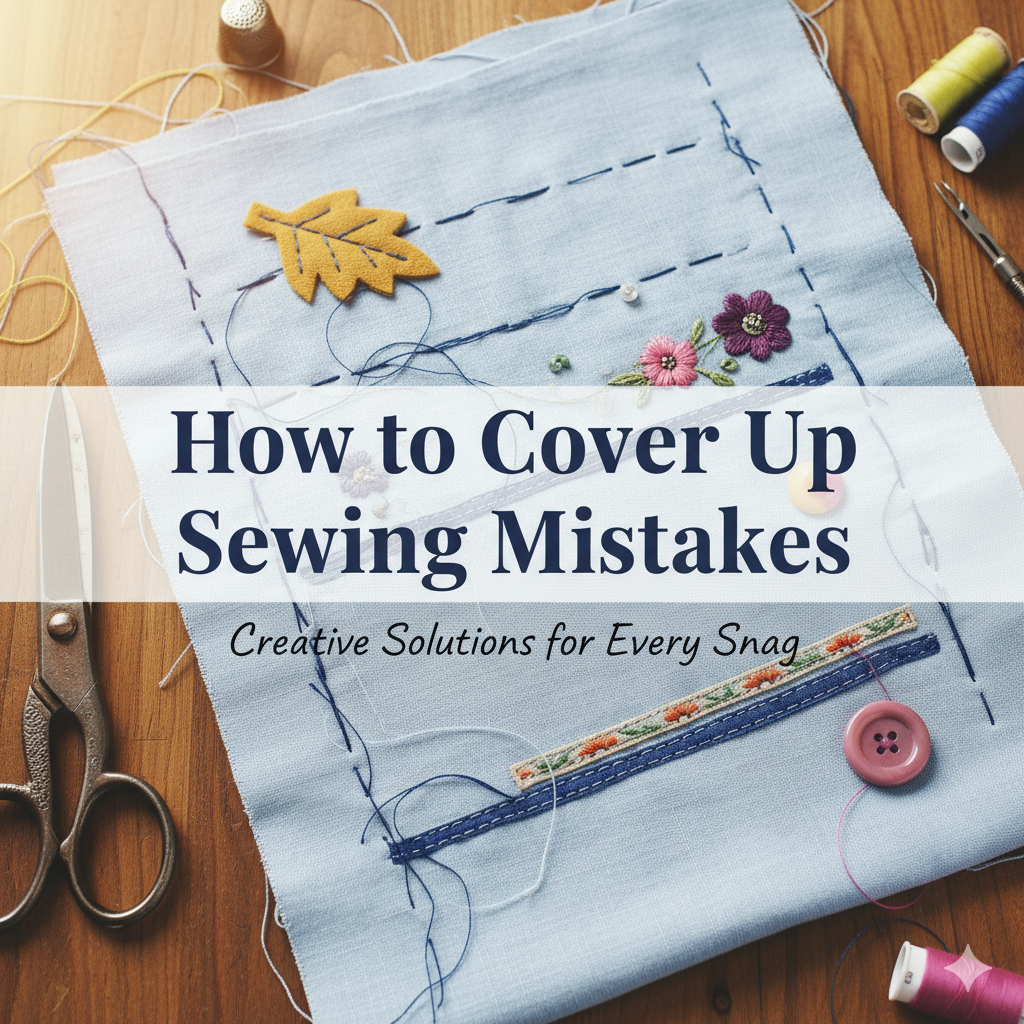
Making a mistake while sewing is a common part of the process. The good news is that most errors can be hidden creatively, often adding a unique touch to your project.
For Small Holes, Stains, or Unwanted Marks:
Appliqués and Patches: This is one of the easiest and most effective solutions. You can use iron-on patches or sew on a fabric appliqué in a fun shape to cover the area completely.
Embroidery: Turn the flaw into a feature by embroidering a simple design, like a flower, star, or your initials, over it. This works beautifully on larger, visible areas.
Beads or Sequins: Strategically placing a cluster of beads or sequins can draw the eye away from the mistake and add a bit of glamour.
Pockets: If the mistake is in a suitable spot (like on the front of a skirt or shirt), sewing on a functional or decorative pocket is a perfect cover-up.
For Hems That Are Too Short:
Add a Contrasting Band: Sew a band of a complementary fabric (like lace, denim, or a bold print) to the bottom of the hem. This extends the length and becomes a design element.
Use Decorative Trim: A wide ribbon or lace trim can be stitched over the existing hemline or added to the bottom to gain those extra inches you need.
For Fabric That Shrank After Sewing:
Gently Stretch While Damp: If the fabric has natural fibers like cotton or wool, you can try to gently stretch it back into shape. Soak the garment in lukewarm water, then carefully stretch it and lay it flat to air dry.

For Messy Stitching or Seams:
The Seam Ripper is Your Best Friend: Often, the cleanest fix is to carefully remove the bad stitches with a seam ripper, press the fabric, and sew it again neatly.
Cover with Topstitching: If a seam is messy but secure, you can sew a new line of decorative topstitching right next to it, which will draw attention away from the original mistake.
The key is not to panic. With a little creativity, you can often fix sewing mistakes in a way that makes your project even more special and personal.
Can a Regular Sewing Machine Do a Cover Stitch?
No, a regular sewing machine cannot create a true cover stitch. This is because the two machines form stitches in fundamentally different ways: a regular sewing machine uses a bobbin thread, while a cover stitch machine uses a looper. However, you can mimic the look of a cover stitch on a regular sewing machine with a few techniques.
How to Mimic a Cover Stitch on a Regular Sewing Machine
The most common and effective method is to use a twin needle (also called a double needle). This will give you two parallel rows of straight stitches on the top and a zigzag pattern on the bobbin side, creating a professional, stretchy hem for knit fabrics.
Here are a few tips for using a twin needle successfully:
Prevent Tunneling: The fabric can sometimes pucker up between the two lines of stitches. To prevent this, try loosening your bobbin tension a little and pressing the seam carefully with steam.
Match Your Needle to the Fabric: Just like with single needles, use the correct type and size of twin needle for your fabric weight to achieve the best results.
Other alternatives include using a zigzag stitch or a lightning bolt stitch, as both offer good stretch for knit fabrics, though they won’t replicate the classic double-line appearance of a cover stitch.
Why a Dedicated Cover Stitch Machine is Different
A cover stitch machine is a specialized piece of equipment designed to create a very specific type of stitch, most famously seen on the hems of T-shirts. Its key advantages are:
Professional Finish: It creates clean, parallel rows of stitching on the top and a neat, looper-thread chain on the underside that is highly durable and stretchable.
Superior Stretch: The unique chainstitch formation on the back allows the seam to stretch significantly without breaking the thread, which is ideal for activewear and tight-fitting knits.

Efficiency for High Volume: If you sew a lot of knit garments, a cover stitch machine can make the hemming process much faster and easier.
To put it simply a regular sewing machine can create a good imitation, but only a cover stitch machine can produce the true, professional-grade finish.
How to Remove Stitching Marks from Fabric?
Removing stitching marks, like those little holes and imprints left behind after you’ve taken out a seam, is a common sewing challenge. Here’s how to do it, starting with the most common method.
The Best Method: Steam and Patience
For most fabrics, a combination of steam and gentle encouragement will make the marks disappear.
Remove the Stitches Carefully: First, use a seam ripper to take out all the thread. Be careful not to pull or snag the fabric.
Lay the Fabric Flat: Place the item on your ironing board.
Apply Steam: Hold a steam iron a few inches above the fabric and blast the area with a generous amount of steam. Do not press the iron down onto the fabric yet, as this can set the marks further.
Gently Manipulate the Fibers: Using your fingers or the end of a sewing pin, gently rub and nudge the fabric fibers along the stitch line back into place. You can also try gently rolling the fabric between your thumb and finger.
Press (Optional): Once the marks are less visible, you can lower the iron and press the area lightly, preferably using a press cloth to protect the fabric. Use an up-and-down motion instead of sliding the iron.
Solutions for Specific Fabrics and Situations
For Delicate Fabrics (Silk, Velvet): Avoid touching the fabric with the iron directly. Hold it further away and use more steam. For velvet, use a velvet board or a pin board to avoid crushing the pile.
For Stubborn Marks on Denim or Canvas: Sometimes, the marks are more pronounced. Try using a soft-bristled toothbrush to gently brush the fibers after steaming.
For a “Last Resort” on White or Light-Colored Fabrics: You can try dabbing the area with a clean cloth dampened with a mixture of equal parts white vinegar and water. Always test this on a hidden seam or scrap piece first to ensure it doesn’t cause discoloration.

What to Do If the Marks Won’t Completely Disappear
Sometimes, especially with heavy fabrics or if the stitches were in for a long time, a faint line may remain. Don’t despair!
Wash the Fabric: Often, a simple wash and dry cycle will relax the fibers and erase the final traces of the marks. This is one of the most effective steps.
Use It as a Guide: If you’re re-sewing the seam, you can often stitch directly over the old line, hiding it completely with your new stitches.
Quick Summary: Your Action Plan
– Seam Rip the threads out.
– Steam the area heavily without pressing.
– Massage the fibers with your fingers or a pin.
– Press lightly with a cloth if needed.
– Wash the item for a final refresh.
The key is patience and gentle handling. With a little steam and time, most stitching marks will vanish completely.
What Can You Use Instead of a Cover Stitch?
You can definitely create professional-looking hems on knit fabrics without a cover stitch machine. Here are the most effective alternatives, starting with the best option.
Your Best Bet: The Twin Needle
The twin needle (or double needle) is the go-to solution for mimicking a coverstitch on a regular sewing machine. It creates two parallel rows of straight stitching on the top and a zigzag thread on the bobbin side, which allows the seam to stretch.
Tips for success:
Prevent “Tunneling”: This is when the fabric puckers between the two lines of stitches. To avoid it, slightly loosen your upper thread tension, and always press the hem well after stitching. Using a walking foot can also help feed the fabric evenly.
Choose the Right Needle: Match the needle size (like 4.0/80) to your fabric weight. Ballpoint or stretch twin needles are best for knits as they slide between fibers instead of piercing them.
Other Helpful Machine Stitches
If you don’t have a twin needle, or for a different look, try these built-in machine stitches:

A Narrow Zigzag Stitch: This is a classic, reliable choice. Set your stitch width and length to a narrow setting (e.g., width 1.5, length 2.5). It’s strong, stretchy, and much less likely to break when the fabric is pulled.
The Lightning Bolt Stitch: Many modern machines have this stitch (it looks like a zigzag with a sharp angle). It’s specifically designed for stretch fabrics and provides excellent elasticity.
The Stretch Blind Hem Stitch: This creates a nearly invisible hem that is also very stretchy. It’s perfect for knits where you don’t want the stitching to be a prominent feature.
Hand-Sewn and No-Sew Options
For an invisible finish or a quick fix, consider these methods:
Hand-Sewn Blind Hem: This technique creates tiny, nearly invisible stitches on the right side of the fabric. It takes a bit of time but gives a beautiful, high-end finish.
Fusible Web or Hem Tape: This is a no-sew solution. A thin, heat-activated adhesive tape is placed in the hem and ironed to bond the layers together. It’s great for a quick fix, but the bond may weaken over time with washing and stretching.
The best method for you will depend on your project, your fabric, and the tools you have on hand. For most people sewing with knits, the twin needle offers the closest and most professional result to a true cover stitch.
How to Remove Cross Stitch Mistakes?
Removing a mistake in cross stitch can feel daunting, but with a bit of patience, it’s very doable. The key is to work carefully to avoid damaging the fabric or the surrounding stitches.
Here’s a step-by-step method for undoing your stitches safely.
The Best Method: Working from the Back
This is the safest and most common technique, as it protects the front of your work.
Identify the Mistake: First, be absolutely sure which stitches you need to remove. It can help to lightly mark the area with a water-soluble pen or a piece of thread laid on the surface.
Turn Your Work Over: Flip your hoop or frame over so you are working on the back of the fabric.
Locate the Thread: Find the thread you need to remove on the back. You will see the “legs” of the stitches running between the holes.
Use Your Seam Ripper or Snips:
With a Seam Ripper: Gently slide the sharp point or the small ball under one of the thread “legs” on the back and carefully slice the thread. Try to cut only the thread you’re removing.
With Embroidery Scissors: Use the very tips of sharp, pointed scissors to snip one of the central threads on the back. The goal is to cut the thread in just one place.

Gently Pull from the Front: Turn your work back to the front. You should now have a cut stitch. Use a needle, tweezers, or your fingers to gently pull the loose thread ends out. If you cut in the right spot, the entire mistaken section should come out easily. If it doesn’t, you may need to turn it back over and snip one more thread.
A More Precise Alternative: The “Un-stitching” Method
For very small mistakes or if you’re nervous about cutting, you can simply “un-stitch” the area.
Use a Tapestry Needle: Take a fresh tapestry needle (it’s blunt and won’t pierce the fabric).
Work from the Front: From the front of your work, use the needle to gently pry up and loosen the top “leg” of an “X” you want to remove.
Pull it Through: Once it’s loose, pull the thread back through to the front. Continue this process, carefully undoing one leg of the stitch at a time until the mistake is removed.
Final Cleanup and Pro-Tips
Dealing with Fuzz: After removal, the area might look fuzzy. Use a piece of Scotch tape—press the sticky side onto the front and back of the fabric to pick up any tiny thread bits.
Re-Stitch the Area: Once the old threads are out, gently pat the fabric with your hand or use a dry, cool iron from the back to help the holes close up. Then, you can re-stitch the correct color.
Patience is Key: Go slowly. Rushing can lead to accidentally snipping a correct stitch or even the fabric itself.
Good Lighting: Make sure you have a bright light so you can clearly see which threads belong to the mistake.
The most important thing is not to panic. Almost every cross-stitcher has to “frog” (rip-it, rip-it!) their work at some point. It’s just part of the process!
How to Sew Without it Being Visible?
Sewing without visible stitches is all about using the right techniques for the right job. Here are the most common and effective methods for creating nearly invisible seams and hems.
For Hems and Closing Openings by Hand
This is where you can achieve the most invisible finishes. The key is to work with tiny stitches that catch only a few threads of the main fabric.
– The Slip Stitch (or Ladder Stitch): This is the magic trick for closing gaps invisibly, like on a pillow after stuffing or the end of a seam. It creates a hidden “zipper” effect.
How it works: You “slip” the needle inside the fold of the fabric, taking a tiny stitch on one side, then a tiny stitch directly opposite on the other side. When you pull the thread taut, the two folded edges pull together and disappear.
– The Blind Hem Stitch (Hand-Sewn): Perfect for hemming dresses, trousers, or curtains where you don’t want any stitches to show on the right side.
How it works: You take a tiny, nearly vertical stitch that catches just one or two threads of the main garment fabric, and then a longer stitch inside the folded edge of the hem. When the hem is let down, the tiny pricks on the front are almost impossible to see.
For Seams and Construction by Machine
While not completely invisible from all angles, these methods hide the stitching line from the right side of the garment.
The Flat-Felled Seam: Common on jeans and men’s shirts. The raw edges are completely enclosed within the seam itself, and you only see one or two lines of topstitching from the outside. The actual construction stitches are hidden inside.
French Seams: This is the gold standard for sheer fabrics and fine sewing. It completely encases the raw edges of the seam allowance inside a tiny, neat tunnel. From the right side of the garment, it looks like a single, clean line with no visible stitching or fraying.
Machine Blind Hem Stitch: Many modern sewing machines have a blind hem stitch. It uses a special presser foot and a specific stitch that takes a few straight stitches in the hem allowance and then a tiny, wide “bite” into the main fabric. When pressed, this tiny bite is virtually invisible from the right side.
The No-Sew Option
Fusible Web or Hem Tape: This is a heat-activated adhesive that comes on a thin strip. You place it between the fabric and the hem, then press with an iron. It bonds the layers together without a single stitch. It’s great for a quick, temporary fix or on fabrics that are difficult to sew.
General Tips for Invisible Sewing Success:
Match Your Thread Perfectly: This is the single most important factor. Take the time to find a thread color that blends in perfectly with your fabric.
Use Fine Needles and Thread: A thinner thread (like 60-weight or fine silk thread) and a sharp, fine needle (like a Microtex or sharps) will make smaller holes and be less visible.
Press As You Go: A well-pressed hem or seam will lay flat and hide your stitches more effectively.
Practice Your Tension: For hand sewing, don’t pull the thread too tight, or it will pucker. For machine blind hems, test the stitch and tension on a scrap first.
The best method depends on your project. For a hem, a hand-sewn blind hem stitch is often the most invisible. For a seam on a sheer blouse, French seams are the professional choice.
Related Reading
Common Sewing Mistakes and How to Avoid Them
How to Save Money on Fabric and Supplies
The Ultimate Guide to Choosing the Right Needle and Thread
17 Sewing Tools You’re Not Using (But Should Be)
8 Little Sewing Secrets That No One Tells Beginners