

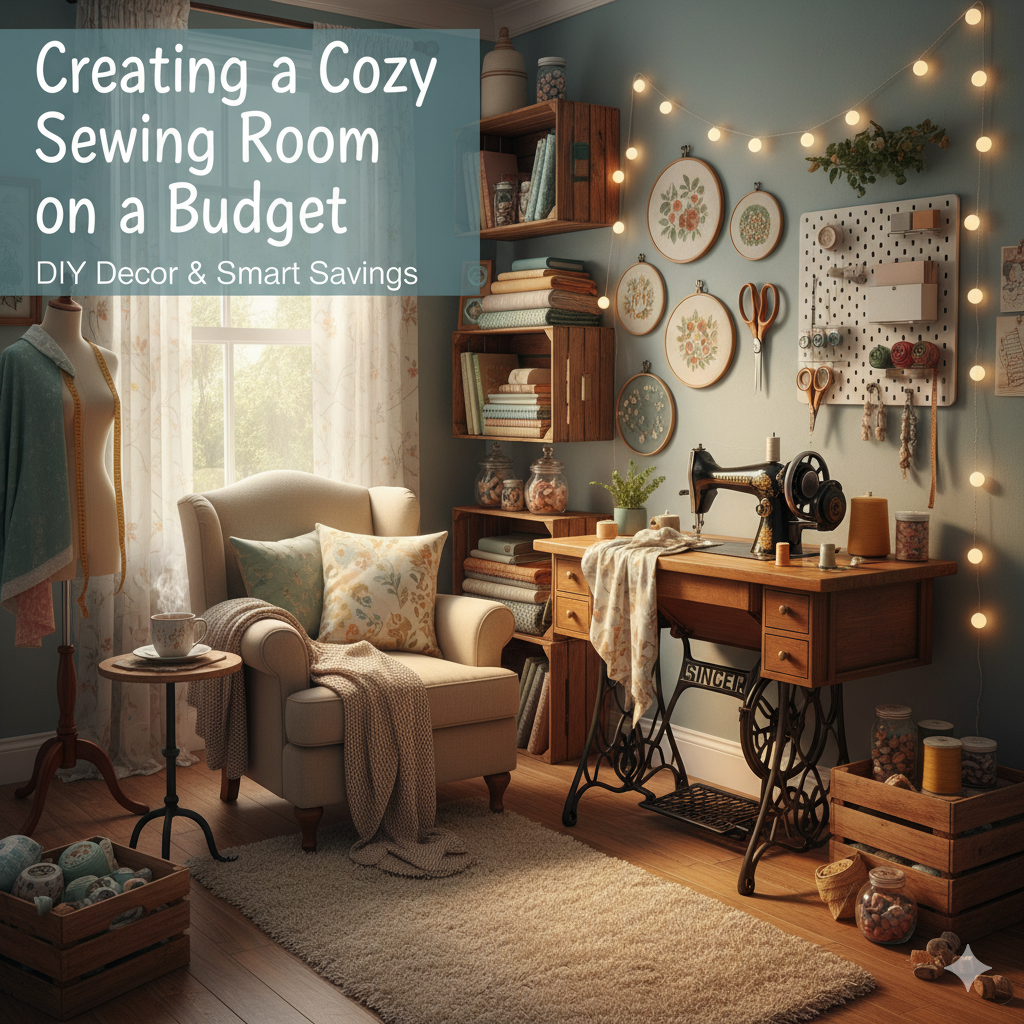
Creating a cozy and functional sewing room doesn’t require a massive budget—just creativity, smart planning, and a bit of DIY spirit. Whether you have a dedicated room or a small corner, these budget-friendly ideas will help you transform your space into an organized and inspiring haven for your sewing projects.
Quick Navigation Menu
***Creating a Cozy Sewing Room on a Budget***
Budget Friendly Furniture Solutions
Smart Storage and Organization
DIY Decor and Personal Touches
Multi-Functional and Space-Saving Hacks
***Cheap Sewing Room Storage Ideas***
Repurpose and Upcycle Furniture
Smart Fabric Storage Solutions
Pattern and Project Management
Assess your space: Start by evaluating your available area, whether it’s a full room, a closet, or a corner. Consider natural light, electrical outlets, and workflow (e.g., cutting, sewing, pressing zones).
Declutter: Before organizing, purge unnecessary items. Sort supplies into categories (keep, donate, trash) and be ruthless about letting go of unused materials. This clears mental and physical space for what truly matters.

2] Budget-Friendly Furniture Solutions
Thrifted finds: Shop secondhand stores or online marketplaces for shelves, tables, and storage units. Vintage desks or dining tables can often be found for a fraction of the cost of new furniture.
Repurpose existing furniture: Use kitchen carts, bookshelves, or dressers already in your home. An IKEA kitchen cart (like the Förhöja) can double as a standing sewing table. Check out Amazons line of sewing furniture here
DIY tables: Build a custom cutting table using affordable materials like cinder blocks and wood planks or combine IKEA Kallax units with a countertop for a storage-rich workspace.
Foldable options: For small spaces, foldable tables (e.g., Arrow Gidget II) offer versatility and can be stored away when not in use.
3] Smart Storage and Organization
Pegboards: Install a pegboard above your sewing desk to hang scissors, rulers, thread, and notions. This is an inexpensive and highly customizable storage solution.
Fabric storage:
– Wrap fabric around comic book boards or dollar-store foam boards for neat, vertical storage that looks like a fabric library.
– Use clear bins or baskets from discount stores to sort fabric by color or project type.
Organization:
– Repurpose kitchen drawer organizers, mint tins, or ice cube trays for small items like needles, bobbins, and pins.
– Store buttons, beads, and other trims in clear glass jars for easy visibility.
– Pattern storage: Use binders with sheet protectors for printed patterns, and store PDF patterns in magazine holders.
Check out Amazon’s Full Line Here
4] DIY Decor and Personal Touches
Lighting: Add affordable LED task lamps or string lights for better visibility and a cozy ambiance.
Color scheme: Paint walls in light, inspiring colors (e.g., soft white, pastel blue, or blush pink) to make the space feel larger and more joyful. A single gallon of paint can often cover a small room.
Curtains: Sew your own curtains from leftover or thrifted fabric to add privacy and a personal touch.

Display ideas: Hang a mirror to check fittings and reflect light. Use wall shelves to display your favorite fabrics, tools, or finished projects.
5] Multi-Functional and Space-Saving Hacks
Dual-purpose furniture: Choose tables with storage drawers or shelves, like a gateleg table that folds down when not in use.
Vertical space: Utilize walls with hanging rods for works-in-progress or to display pattern pieces.
Mobile storage: Use rolling carts to move supplies between your cutting, sewing, and pressing zones.
Hidden storage: Store fabric in ottomans with built-in storage or under beds if space is limited.
Check Out These Great Space Saving Hacks on Amazon Here
Label everything: Use a label maker or handwritten tags to keep categories clear and make tidying up faster.
Regular purges: Schedule seasonal decluttering sessions to prevent accumulation and keep your space functional.
Daily tidy-up: Spend the last 5 minutes of each sewing session returning tools to their designated homes. This habit makes it much easier to start your next project.
A cozy sewing room on a budget is all about creativity and intentionality. By repurposing furniture, embracing DIY solutions, and organizing with smart storage, you can create a space that fuels your passion without breaking the bank. Remember, the goal is functionality infused with personal style—a place where you love to create.
Cheap Sewing Room Storage Ideas
Creating an organized and functional sewing room doesn’t have to break the bank. With some creativity, DIY spirit, and smart use of budget-friendly finds, you can transform your space into a cozy and efficient haven. Here are some cheap sewing room storage ideas inspired by real-life solutions and practical tips:
1] Repurpose and Upcycle Furniture
Thrifted finds: Look for secondhand bookshelves, desks, or cabinets at thrift stores or online marketplaces. One sewist found a $100 shelving unit for only $30 at a thrift store.
DIY solutions: Use cinder blocks and wood planks to build sturdy, adjustable shelves for fabric storage. Repurpose an old dresser or hutch for storing notions and supplies.
Multi-functional furniture: Choose foldable tables (e.g., Lifetime adjustable table) or rolling carts that can be tucked away when not in use.
2] Smart Fabric Storage Solutions
Comic book or foam boards: Wrap fabric around inexpensive comic book boards or dollar-store foam boards to create uniform, vertical stacks. This makes it easy to see and access your fabric while saving space.

Baskets and bins: Use affordable baskets (from Dollar Tree or Walmart) to sort fabric by color or project. Clear bins allow you to see contents easily.
Scrap organization: Sort small scraps by color or size in clear containers or jars. For example, use dollar-store dish buckets or recycled jars for strips and smaller pieces.
3] Notion and Tool Organization
Pegboards: Install a pegboard above your sewing desk to hang scissors, rulers, thread, and other tools. Customize it with DIY leather straps for shelves or hooks.
Drawer organizers: Repurpose kitchen drawer organizers or dollar-store containers for storing needles, bobbins, pins, and other small items.
Thread storage: Use spice racks or DIY thread holders to keep spools organized and visible. For example, a mega thread rack from craft stores (with a coupon) can be a budget-friendly solution.
4] Pattern and Project Management
Binders and page protectors: Store printed patterns in page protectors within a 3-ring binder. This keeps them flat and easy to browse.
Magazine holders: Use cardboard magazine holders (like those from IKEA) to store PDF patterns and tutorials.
WIP boxes: Designate inexpensive bins or boxes (e.g., Target’s $3 bins) for ongoing projects to keep all materials together.
Jars and containers: Repurpose glass jars (e.g., from Nutella or olives) for storing buttons, beads, or small scraps.
Over-the-door organizers: Use a shoe organizer (under $10 at Walmart) to store notions, with labels for easy identification.
Label everything: Use a label maker or handwritten tags to keep categories clear. This helps maintain organization and makes tidying up faster.

Lighting: Add affordable LED string lights or task lamps for better visibility and a cozy ambiance.
Wallpaper or fabric covers: Use leftover wallpaper or fabric to cover clear bins for a prettier look.
Display ideas: Hang a mirror or use wall shelves to display favorite fabrics or tools, adding personality without cost.
Organizing your sewing room on a budget is all about creativity and intentionality. By repurposing furniture, embracing DIY solutions, and using smart storage hacks, you can create a functional and inspiring space without spending a fortune. Remember, the goal is to make your sewing area a place where you love to create! Check Out These Cool Decor Items on Amazon
Related Reading
20 Essentials for Any Sewing Room Every Beginner Needs
24 Sewing Room Ideas to Organize Your Space Like A Pro
7 Tips For Setting Up Your Perfect Sewing Space
Bright & Colorful Sewing Room Ideas for Creative Inspiration
The Ultimate Sewing Room Essentials Checklist