

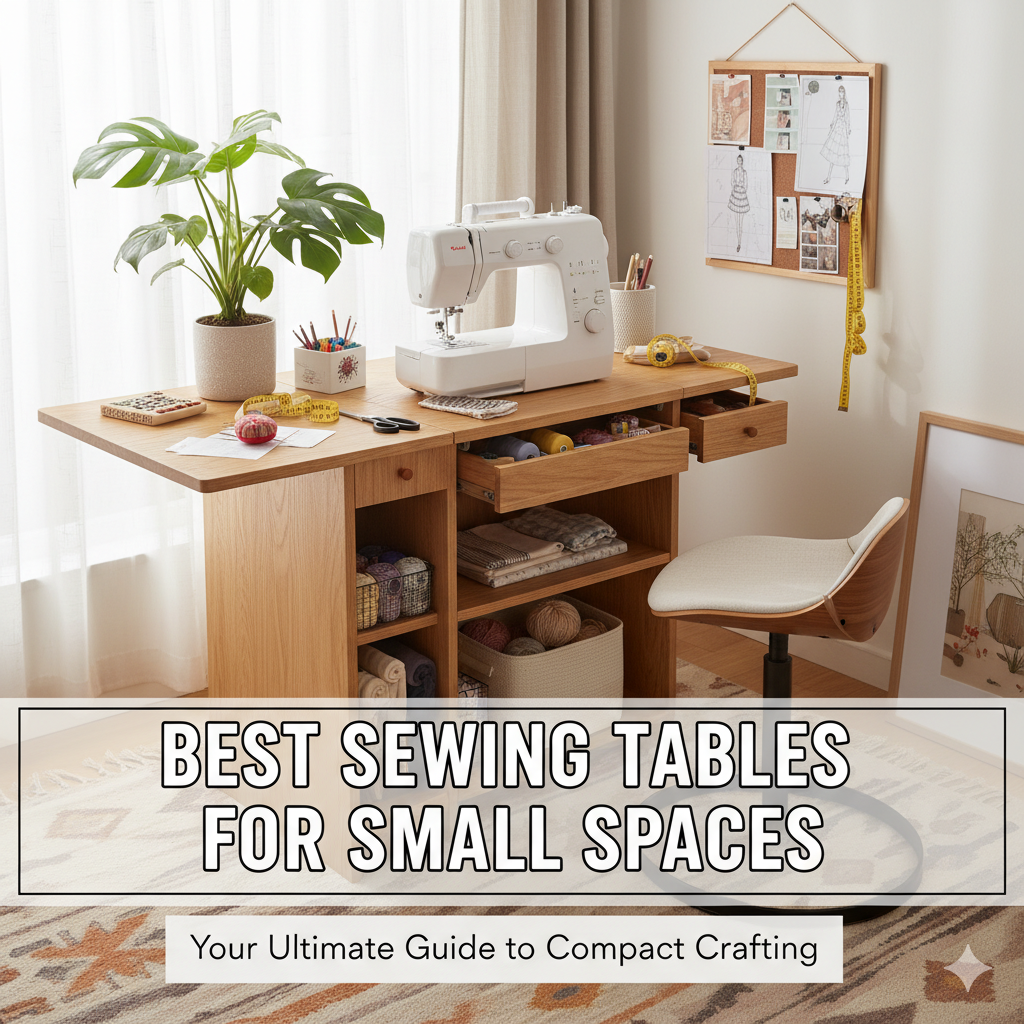
Finding a dedicated spot for your sewing passion can be a real challenge when you’re short on square footage. Whether you’re in a cozy apartment, carving out a craft corner, or sharing a multi-purpose room, the dream of a permanent sewing station can feel out of reach. But what if the right furniture could change everything?
A well-chosen sewing table can transform your sewing experience, making it more organized, efficient, and truly enjoyable. This guide will walk you through the best compact, foldable, and multifunctional designs that prove you don’t need a sprawling studio to create beautiful things.
Quick Navigation Menu
What to Look for in a Sewing Table for Small Spaces
Top Picks for Compact Sewing Tables
Alternative Solutions for Small Sewing Spaces
Tips for Maximizing Your Sewing Area
What to Look for in a Sewing Table for Small Spaces
Before I dive into specific styles, it’s important to know what features make a sewing table truly suited for a small area.
Compact Size & Foldability: The golden rule for small spaces is that the table shouldn’t be a permanent obstacle. Look for designs that are slim by nature or can be folded down completely and stored against a wall or in a closet.
Stability & Durability: A table that shakes or wobbles when your machine is running fast is a recipe for frustration. Ensure the design is sturdy enough to handle the vibration and pressure of sewing.

Built-in Storage: When floor space is limited, integrated storage is a lifesaver. Shelves, drawers, or even small compartments help keep threads, bobbins, and tools organized and off your work surface.
Portability: If your room needs to serve multiple functions, consider a table on locking wheels. This allows you to easily roll your sewing station out of the way when needed.
Ergonomic Design: Comfort is key. A table at the wrong height can lead to back and neck strain. Look for designs that allow you to sew with your arms relaxed and your back straight.
Top Picks for Compact Sewing Tables
Here are some of the most effective types of sewing tables for maximizing a small space.
Foldable Sewing Tables
These are the classics of space-saving sewing. Typically featuring legs that fold flat, these tables can be leaned against a wall or slid under a bed when not in use.
Pros: Ultimate space-savers, often very affordable, simple to set up and put away.
Cons: Can sometimes be less stable than permanent furniture, may have limited storage.
Best For: Sewists who need to pack their station away completely after each use.
Check Out Amazon’s Line of Foldable Sewing Tables Here
Wall-Mounted Drop-Leaf Tables
For the tightest of spaces, this is a brilliant solution. These tables feature a surface that hinges to the wall and can be folded down when you need it and pushed up flat against the wall when you don’t.

Pros: Takes up zero floor space when not in use, creates a truly dedicated spot.
Cons: Requires installation into wall studs for stability, not easily moved.
Best For: Renters or homeowners comfortable with DIY installation who want a permanent-but-hidden solution.
See Wall Mounted Drop Leaf Tables on Amazon Here
Cabinet-Style Sewing Tables
For those who prefer a more furniture-like look, these cabinets are designed to hide your machine inside when closed, often presenting a neat, flat surface or a piece of attractive furniture.
Pros: Excellent for concealing projects, often includes generous hidden storage, very stable.
Cons: Can be heavier and more expensive, typically a permanent fixture.
Best For: Sewists who want their space to look tidy and double as a living area.
Here are Some Cabinet Style Sewing Tables on Amazon
Portable Rolling Tables
Think of these as your sewing command center on the move. Often cart-like with multiple shelves, they can be wheeled into a closet or corner.
Pros: Extremely versatile for multi-use rooms, offers great vertical storage, easy to reposition for lighting.
Cons: Requires empty space to be rolled into, can feel less anchored.
Best For: Those who share a room and need to frequently clear the floor space.
Check Out These Portable Rolling Tables On Amazon
Convertible Craft Desks
These versatile pieces are designed to adapt. They might feature adjustable heights to switch between sewing and cutting, or modular components that can be rearranged.
Pros: Highly functional for sewists who also quilt, craft, or cut patterns, very customizable.
Cons: Can have a larger footprint, often a higher price point.

Best For: The serious hobbyist who engages in multiple types of projects.
Alternative Solutions for Small Sewing Spaces
Don’t feel you have to buy a specialized piece of furniture! Plenty of creative solutions can work perfectly.
The Sturdy Stand-In: A simple, strong desk or even a small dining table can be an excellent base. Amplify it with rolling storage carts that fit underneath and add-on organizers on top.
The DIY Fold-Down: Attach a sturdy wooden shelf to the wall with heavy-duty brackets to create your own custom drop-leaf table. It’s a budget-friendly project with a big impact.
The Repurposed Hack: Look at other furniture with a creative eye. A small, deep bookshelf can be turned on its side to create a cubby-style sewing center. Many crafters have famously modified simple kitchen carts into perfect mobile sewing stations.
4 Tips for Maximizing Your Sewing Area
No matter which table you choose, a few smart habits will make your small space feel larger.
Go Vertical: Use the walls! A pegboard with hooks is a game-changer for storing scissors, rulers, and supplies. Floating shelves hold fabric and patterns.
Edit Your Tools: Keep only the essentials you use for every project within arm’s reach. Store less frequently used items in another room or a labeled bin.
Light It Right: Good lighting is non-negotiable. A bright, adjustable lamp will make your small corner highly functional and prevent eye strain.
Contain the Chaos: Use clear bins, drawer dividers, and thread organizers. A place for everything means a clean, ready-to-sew surface in seconds.
Your sewing space should inspire you, not constrain you. By choosing a sewing table that prioritizes compact size, smart storage, and sturdy functionality, you can create an efficient and joyful sewing haven no matter how small your home is. The best table for you is the one that fits seamlessly into your life and your space, allowing you to focus on what you love most: the creative journey of sewing. Happy creating
Related Reading
Top 30 Must Have Sewing Accessories for Beginners