

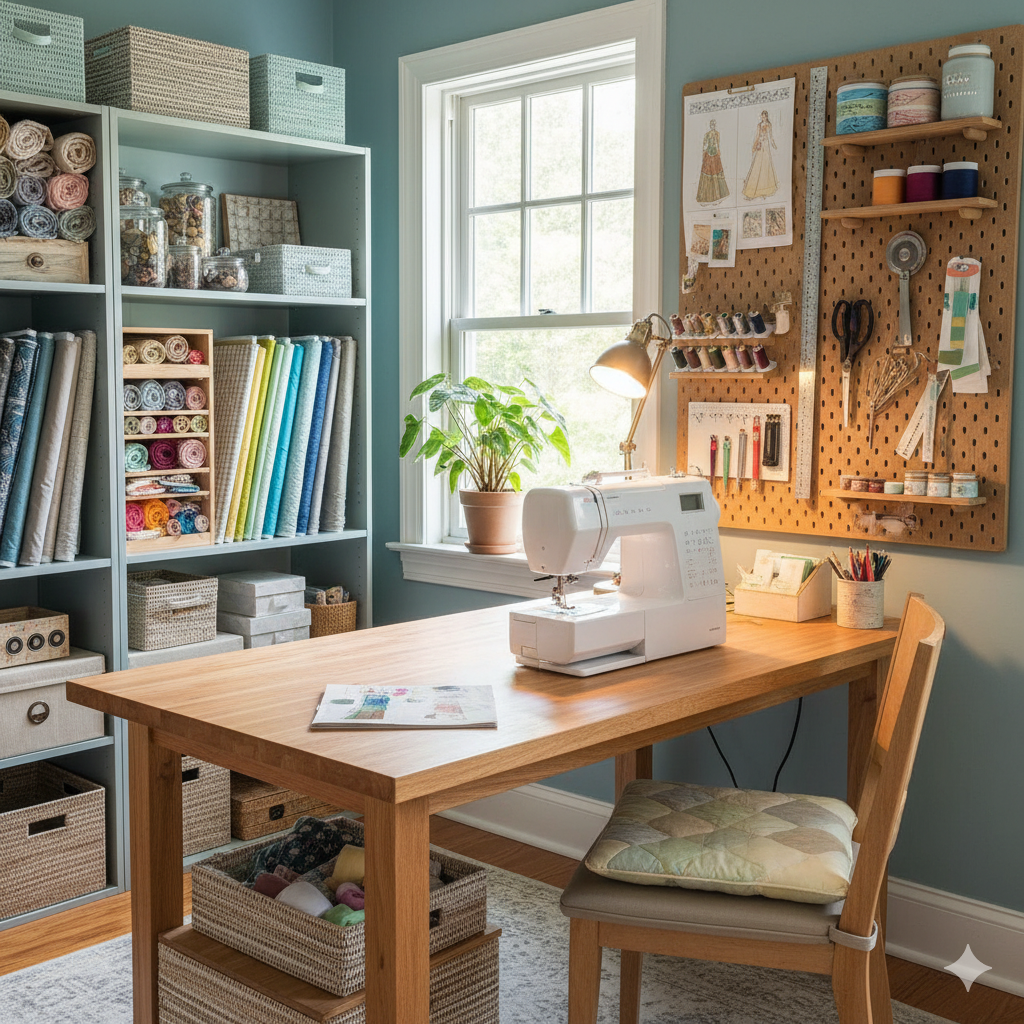
Creating an efficient and inspiring sewing space is essential for any sewing enthusiast, whether you’re a beginner or an experienced sewist. A well-planned area can enhance your creativity, improve your productivity, and make the entire sewing process more enjoyable. This comprehensive guide draws from expert sources to help you design and organize a sewing space that perfectly suits your needs, budget, and available area.

Get The Perfect Sewing Space: 7 Tips For Success
Quick Navigation Menu
Storage Solutions and Organization
Creating Your Perfect Sewing Sanctuary
1] Assessment and Planning: Laying the Foundation
Before purchasing any storage solutions or equipment, thoughtful assessment and planning are crucial for creating a sewing space that truly works for you.
Evaluate your available space: Consider where you’ll be sewing—whether it’s a dedicated room, a corner of another room, or a multi-purpose area. Measure your available space and note architectural features like windows, electrical outlets, and doors that swing into the room. Remember that no space is too small as long as you and your machine fit, though smaller spaces require more creative storage solutions.
Analyze your sewing habits and needs: Think about how often you sew, what types of projects you typically work on, and whether you need to pack up your supplies after each session. If you frequently work on multiple projects simultaneously, you’ll need a system for organizing works in progress. Be honest with yourself about your organizational style—do you prefer everything visible or tucked away? There’s no right answer, only what works best for you.
Establish your budget: Sewing can be an expensive hobby, so determining your budget upfront helps guide your decisions. Fortunately, there are options for every price range, from DIY solutions and upcycled furniture to purchasing specialized storage systems. If your budget is limited, focus first on essentials and expand gradually as resources allow.

2] Essential Tools and Equipment: Building Your Toolkit
Equipping your sewing space with the right tools is fundamental to an efficient sewing experience. The tools you need will depend on your sewing projects, skill level, and budget.
Basic Sewing Toolkit
Every sewing space should contain these fundamental items:
– Sewing machine
– Cutting tools (scissors, rotary cutter)
– Marking tools
– Clear ruler
– Pins and needles
– Measuring tape
– Pin cushion
– Iron
– Seam ripper
Equipment for Different Budget Levels
For those with a minimalist budget, focus on the basic sewing toolkit with portable storage that can be packed away. As your budget increases, consider adding a serger, specialized pressing tools, specialized rulers, and thread racks with dedicated shelving and rolling carts for organization. For a fully equipped space, you might add a coverstitch machine, dress form, dedicated cutting table, and pressing station with custom storage solutions and extensive organizational systems.
As you expand your tool collection, consider what will genuinely improve your sewing experience rather than giving in to every tempting “sewing toy” on the market. Specialized tools should earn their place in your space by being used regularly enough to justify the storage they require.
3] Storage Solutions and Organization: Taming the Chaos
Effective storage is the cornerstone of an efficient sewing space. The right organizational systems keep your supplies accessible while minimizing clutter.
Fabric Storage Solutions
Your fabric stash requires thoughtful organization to be both inspiring and manageable:
Folding and displaying: Fold fabric neatly using a consistent method. Consider wrapping pieces around cardboard bolts (like in fabric stores) for uniform storage on shelves. This approach allows you to see your entire collection at a glance while keeping it tidy.
Categorization system: Organize fabrics by type, color, or project destination. Clear bins allow you to see contents while protecting from dust. For those who prefer hidden storage, consider using ottomans with storage compartments or decorative cabinets.
Small piece management: For pieces smaller than one yard, use drawer dividers or organizing bins. Fat quarters and other small cuts can be folded to fit neatly into drawers or small containers.

Notion and Thread Organization
Small items like threads, buttons, and zippers can easily create clutter without proper systems:
Thread storage: Keep threads tangle-free and accessible using thread racks, storage boxes, baby food jars, small plastic containers, or even ice trays. Organize threads by type and color for easy selection.
Notion containment: Use nested cups, small bins, or drawer organizers to keep buttons, pins, and other small items sorted. Clear containers allow you to see contents at a glance.
Tool accessibility: Hang frequently used tools like scissors, rulers, and measuring tapes on wall-mounted pegboards. This keeps them visible and accessible while freeing up workspace.
Pattern Management
Whether you use printed commercial patterns or PDF patterns, having an organization system saves frustration:
Printed patterns: Store in boxes, filing cabinets, or on shelves. Hanging pattern hooks can also be effective for commercial patterns.
PDF patterns: If you print at home, store patterns in plastic inserts in binders, file them in large manila envelopes, or fold them into ziplock or reusable project bags. If you print at a copy shop, consider storing them rolled or in hanging files.
4] Ergonomics and Workflow: Designing for Efficiency
A well-designed sewing space isn’t just about storage—it’s about creating an efficient workflow that supports your creative process.
Create dedicated zones: Establish specific areas for different sewing tasks: cutting, sewing, pressing, and finishing. Having dedicated zones with the necessary tools in each area prevents constant moving around and searching for supplies. Some sewists even keep duplicate notions in each zone to maintain workflow efficiency.
Prioritize accessibility: Place your most frequently used tools within easy reach of where you use them. Your seam ripper shouldn’t be hidden at the back of a drawer—it should be readily accessible to maintain your creative flow.
Consider work surfaces: Your sewing table should be at a comfortable height to prevent strain. If possible, invest in a cutting table at waist height to reduce back strain during fabric cutting. If space is limited, consider adjustable or fold-down tables.
Implement project management: Use baskets, bins, or project bags to keep current projects organized and contained. This approach prevents project pieces from spreading across your workspace and helps you stay focused on one project at a time.
5] Lighting and Atmosphere: Creating an Inspiring Environment
The ambiance of your sewing space significantly impacts your enjoyment and productivity in the area.
Maximize natural light: If possible, position your sewing machine near a window to take advantage of natural daylight. This provides the best illumination for detailed work and color matching.
Supplement with artificial light: Despite your machine’s light, additional lighting is essential. Use a combination of overhead lighting, task lamps, and portable lights to eliminate shadows. Some sewists even use headlamps for detailed work.
Personalize your space: Make your sewing area inspiring by adding personal touches that spark joy—whether it’s a color scheme you love, plants, artwork, or displayed finished projects. However, limit decorative items to avoid visual clutter that might distract from your work.
Control clutter: Maintain a balance between inspiration and organization. While it’s wonderful to have fabric and tools visible for inspiration, too much visual noise can be overwhelming. Use closed storage for items that aren’t regularly used.

6] Maintenance and Upkeep: Sustaining an Functional Space
Creating your ideal sewing space is just the beginning—maintaining it ensures long-term functionality and enjoyment.
Establish cleaning routines: Develop the habit of tidying your space after each sewing session. Even just 60 seconds of quick organization can make a significant difference in maintaining an inviting workspace.
Regularly reassess your systems: As your sewing practice evolves, your organizational needs may change. Periodically evaluate what’s working and what isn’t, and don’t be afraid to adjust your systems accordingly.
Implement a donation box: Keep a box handy for supplies you no longer use. When you come across items that no longer serve your sewing practice, place them in the box for donation to schools, community centers, or thrift stores. This prevents accumulation of unnecessary items.
Clean your equipment regularly: Maintain your sewing machine and other tools according to manufacturer instructions. A well-maintained machine not only performs better but also encourages regular use.
7] Creating Your Perfect Sewing Sanctuary
Setting up an ideal sewing space is a highly personal process that depends on your available area, budget, sewing practice, and organizational preferences. Whether you have a dedicated room or a corner of another space, the key principles remain the same: prioritize your workflow, maximize storage efficiency, and create an environment that inspires creativity.
Remember that your sewing space should evolve with your practice. Start with the essentials, then expand and adapt as you discover what works best for you. Don’t be afraid to try unconventional solutions—the best sewing space is one that perfectly supports your unique creative process.
With careful planning, thoughtful organization, and regular maintenance, you can transform any area into a functional and inspiring sewing sanctuary that enhances your enjoyment of the craft and helps you create beautiful garments you love to wear.
Related Reading
Creating a Cozy Sewing Room on a Budget
20 Essentials for Any Sewing Room Every Beginner Needs
24 Sewing Room Ideas to Organize Your Space Like A Pro
Bright & Colorful Sewing Room Ideas for Creative Inspiration
The Ultimate Sewing Room Essentials Checklist