

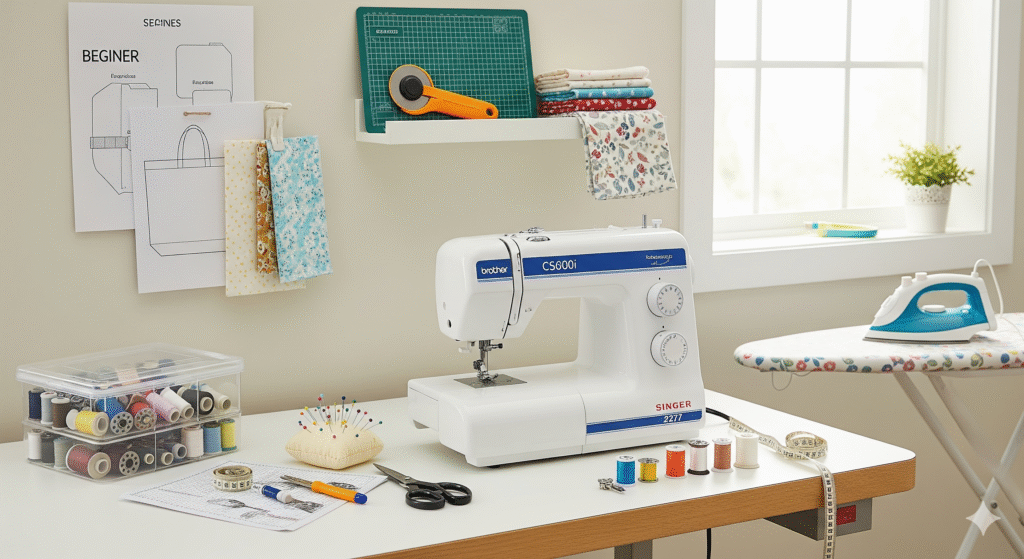
Stepping into the world of sewing is an exciting journey of creativity and skill-building. The cornerstone of this new endeavor is a well-equipped sewing room, a dedicated space that is less about sheer size and more about thoughtful organization and the right tools. For a beginner, a functional sewing space is what transforms frustration into flow, providing the necessary support to learn, practice, and ultimately create beautiful, professional-looking projects with confidence. By focusing on a core set of essentials, you lay a foundation that makes the process enjoyable and sets you up for long-term success.
The key to building your first sewing kit is to prioritize quality over quantity and versatility over novelty. You don’t need every gadget on the market; you need reliable, fundamental tools that will handle 90% of the tasks your early projects demand. From the critical act of pressing seams to the precision of accurate cuts, each tool on this list serves a distinct purpose in the garment and craft creation pipeline. Investing in these essentials will empower you to focus on mastering techniques rather than fighting with inadequate equipment.

Quick Navigation Menu
What Not to Do in Your Sewing Room?
For Your Sewing Machine’s Health
For Your Sanity & Productivity
20 Sewing Room Essentials
1] Sewing Machine
Details: This is your most important investment. For beginners, a mechanical machine is often recommended over a computerized one due to its simplicity, durability, and lower cost. Look for a model that offers a basic set of stitches: a reliable straight stitch, a zigzag stitch (for finishing edges and sewing stretch fabrics), and an automatic one-step buttonhole function. Brands like Brother and Janome offer highly-rated entry-level models that are user-friendly.
2] Fabric Scissors (Dressmaker’s Shears)
Details: These are your primary tool for cutting fabric. Quality shears, like those from Gingher, are sharpened to a precise angle for clean, effortless cuts through multiple layers of fabric. The offset handle design allows the fabric to lie flat on the table as you cut. Crucially, use these for fabric only. Cutting paper will dull the blades instantly.
3] Seam Ripper
Details: A humble but vital tool for every skill level. The sharp, curved blade is designed to cleanly slide under a single stitch, slicing it without pulling or snagging the fabric. A comfortable handle is a bonus for longer “un-sewing” sessions. View it as a learning tool, not a sign of failure.
4] Iron and Ironing Board
Details: Pressing is not optional; it is integral to sewing. A good steam iron and a sturdy, well-padded ironing board are necessary to set seams, flatten edges, and create crisp pleats and darts. Rowenta is a top brand for irons, but any reliable steam iron will work. A pressing ham is a useful add-on for pressing curved seams.
5] Measuring Tape
Details: A flexible, non-stretch fiberglass tape measure is essential for taking accurate body measurements and measuring curved pattern pieces or seams. Look for one with double-sided printing (inches on one side, centimeters on the other) and reinforced ends to prevent fraying.

6] Seam Gauge
Details: This small, metal ruler with a sliding marker is a workhorse for precision. It’s perfect for quickly measuring and consistent seam allowances, turning up hems, checking buttonhole spacing, and marking button placements. Its small size makes it incredibly handy at the sewing machine.
7] Clear Acrylic Rulers
Details: Used primarily with rotary cutters, these transparent rulers allow you to see the fabric underneath for perfectly straight cuts and accurate measurements. A long 6″ x 24″ ruler is versatile for most projects. The grid lines help in aligning patterns and ensuring cuts are on the grainline.
8] Rotary Cutter
Details: This is a game-changer for cutting long, straight lines and curves with precision. It works like a pizza cutter for fabric. A 45mm cutter is the most common and versatile size. Always use it with a cutting mat and exercise extreme caution, as the blade is extremely sharp.
9] Self-Healing Cutting Mat
Details: This mat protects your table surface from the rotary cutter’s blade. The “self-healing” surface closes up after cuts, ensuring longevity. Mats are gridded with measurements to aid in cutting. A larger mat (e.g., 24″ x 36″) provides more flexibility for cutting larger pieces of fabric.
10] Pins and Pincushion
Details: Fine, sharp glass-head pins are ideal because they are smooth, slide easily into fabric, and the glass heads won’t melt if you accidentally iron over them. A magnetic pin holder or a classic tomato pincushion keeps them organized and within reach.
11] Wonder Clips
Details: These plastic clips are indispensable for holding layers of fabric together where pins would be awkward, leave holes, or be a safety hazard—such as with bulky seams, vinyl, leather, or delicate fabrics.
12] Thread
Details: Quality thread is non-negotiable. Cheap, old thread can break, shed lint, and cause constant machine headaches. Invest in good all-purpose polyester thread (like Gutermann or Mettler) for its strength and elasticity. Start with a basic palette: white, black, beige, gray, and navy.
13] Marking Tools
Details: You need a way to transfer pattern markings (darts, pleats, notches) onto your fabric. Tailor’s chalk (which brushes away) and water-soluble fabric pens (which disappear with a dab of water) are the most common. Always test your chosen marker on a fabric scrap first.

14] Task Lighting
Details: Good lighting is critical for seeing stitch details, accurate cutting, and matching colors. An adjustable LED architect lamp that can be directed right over your needle or cutting surface is ideal. It reduces eye strain and helps you achieve higher accuracy.
15] Ergonomic Chair
Details: Sewing involves long periods of sitting. An adjustable chair with good lumbar support will prevent back and neck pain. Look for one on wheels so you can easily swivel between your machine and ironing board.
16] Storage Solutions
Details: Organization is key to a peaceful sewing experience. Use clear plastic bins to sort fabric by type or project. Pegboards are perfect for hanging frequently used tools like scissors, rulers, and rotary cutters. IKEA Kallax units with fabric bins are a popular and affordable storage staple for sewing rooms.
17] Cutting Table
Details: Cutting on the floor or a standard-height table is hard on your back. A dedicated cutting table at hip height allows you to work comfortably and apply even pressure when using a rotary cutter. Many tables are foldable or have adjustable heights to save space.
18] Bobbins and Machine Needles
Details: Buy a large pack of bobbins that are specifically designed for your machine model to avoid tension issues. Keep a variety of machine needles on hand; universal needles are for wovens, ballpoint needles are for knits, and denim needles are for heavy fabric. Change your needle frequently (every 8-10 hours of sewing) for the best stitch quality.
19] Full-Length Mirror
Details: If you sew garments, a mirror is indispensable for fitting. It allows you to check the drape, fit, and hang of a garment on your body during the construction process, saving you from finishing a project that doesn’t fit properly.
20] Project Organization System
Details: Use large Ziplock bags or clear plastic project boxes to keep all the pieces, pattern, thread, and notions for a single project together. This prevents pieces from getting lost and allows you to pause a project without forgetting your plan. A binder with clear sleeve protectors is perfect for storing loose patterns.

What Not to Do in Your Sewing Room?
A sewing room, whether a dedicated space or a corner of a room, is a haven for creativity. However, a few missteps can turn it from a sanctuary into a frustrating or even hazardous place. Here’s a comprehensive list of what not to do in your sewing room, categorized for clarity.
Safety First: The Absolute Don’ts
– Don’t Leave Irons Unattended. This is the number one rule. A hot iron can cause severe burns or start a fire in seconds if it tips over or is left on a fabric pile. Always turn it off when you step away, even for a moment.
– Don’t Have Loose Cords or Trip Hazards. Cords for machines, irons, and task lights snaking across the floor are an accident waiting to happen. Use cord shorteners, clips, or tape to secure them. You don’t want to trip while holding scissors or a hot iron.
– Don’t Eat or Drink Over Your Projects. One spill of coffee, wine, or a greasy snack can ruin hours of work on delicate fabric. Keep beverages covered and away from your machine, and have a designated snack spot away from your work surface.
– Don’t Sew Over Pins. This is a classic debate, but it’s a bad habit. Hitting a pin can break your needle, sending sharp shards flying. It can also throw off your timing or damage your machine’s bobbin case. It’s much safer to remove pins just before the needle reaches them.
– Don’t Leave Sharp Tools Unsecured. Rotary cutters should always be closed when not in use. Needles should be in a pincushion, not left on the table or stuck in the fabric where they can get lost. Scissors should be stored safely, not left with points facing up.
– Don’t Use Dull Blades and Needles. A dull rotary blade or scissors require more pressure to cut, increasing the chance of a slip and a nasty cut. A dull needle can damage fabric and cause frustrating skipped stitches. Change them regularly.
For Your Sewing Machine’s Health
– Don’t Skip Cleaning and OilING. Lint and dust are the enemies of your machine. Not cleaning it regularly can lead to poor performance, jamming, and expensive repairs. Consult your manual for how to clean it and use the correct oil (if your machine requires it).
– Don’t Force the Fabric Through the Machine. You are not the motor. Let the feed dogs do the work of moving the fabric. Pushing and pulling can bend the needle, break threads, and misalign your machine.
– Don’t Use the Wrong Needle for the Fabric. Using a universal needle on leather or a ballpoint needle on quilting cotton will lead to poor results. Match your needle type and size to your project for the best stitches.
– Don’t Leave the Presser Foot Down When Not Sewing. This keeps tension on the tension discs unnecessarily and can wear them out over time. Get in the habit of lifting the presser foot when you stop.

For Your Sanity & Productivity
– Don’t Work in a Mess. Chaos breeds frustration. You can’t find your fabric shears, you misplace your seam ripper, and you can’t see your cutting mat under the clutter. A quick 5-minute tidy at the end of each session makes the next one much more enjoyable.
– Don’t Have Poor Lighting. Sewing in a dimly lit room is a fast track to eye strain, headaches, and mistakes. Invest in good, bright, task lighting for your machine and cutting area.
– Don’t Ignore Ergonomics. Hunching over a low table for hours will wreck your back, neck, and shoulders. Ensure your chair and table are at a comfortable height. Take breaks to stretch and look away from your work.
– Don’t Start Without a Plan (Sometimes). While spontaneous creativity is great, jumping into a complex project without reading the pattern or planning your steps often leads to wasted fabric and disappointment. Do a quick mental walkthrough first.
– Don’t Hoard Every Scrap. While it’s good to keep some scraps for testing stitches or small projects, holding onto every tiny unusable piece creates overwhelming clutter. Be ruthless and periodically purge the bits too small to be useful.
– Don’t Compare Your Space to Others Online. Your sewing room does not need to be a Pinterest-perfect, color-coordinated dream space to be functional and joyful. Focus on what works for you and your budget.
Related Reading
24 Sewing Room Ideas to Organize Your Space Like A Pro
Creating a Cozy Sewing Room on a Budget
7 Tips For Setting Up Your Perfect Sewing Space
Bright & Colorful Sewing Room Ideas for Creative Inspiration
The Ultimate Sewing Room Essentials Checklist