
If you’ve been sewing for a while, chances are you’ve collected the basics—scissors, pins, a seam ripper, and maybe even a rotary cutter. But here’s the thing: sewing is so much easier (and more enjoyable) when you have the right tools in your kit. Beyond the essentials, there are clever, underrated gadgets that can save you time, improve accuracy, and take the frustration out of tricky projects.
In this post, I’m shining a light on 17 sewing tools you might not be using yet—but absolutely should be. From handy measuring aids to problem-solving accessories, these tools can transform the way you sew, making your process smoother and your results more professional. Whether you’re a beginner building your toolkit or a seasoned sewist looking for smart upgrades, you’ll discover game-changing additions that you’ll wonder how you ever lived without.
It’s time to level up your sewing game. While your trusty shears, pins, and seam ripper are essential, there’s a whole world of tools that can make your projects easier, faster, and more professional.

Quick Navigation Menu
17 Sewing Tools You’re Not Using
What Should You Buy When You First Start Sewing?
The Next Tier: Very Useful Add-Ons
What You DON’T Need Right Away
17 Sewing Tools You’re Not Using
1] Point Turner & Creaser
What it is: A pointed (often wooden or plastic) tool with a curved end.
Why you need it: Poking out corners (like on collars or cuffs) with scissors can poke through the fabric. This tool gives you a sharp, professional point without the risk. The curved end is perfect for pressing open curved seams smoothly.
2] Hera Marker
What it is: A blunt, plastic tool with a thin edge.
Why you need it: It “scores” or creates a temporary crease in the fabric to mark sewing lines, darts, or quilting designs without any chalk, pen, or residue. It’s perfect for fabrics where other marks won’t show or are difficult to remove.
3] Walking Foot
What it is: A special presser foot for your sewing machine that has its own set of feed dogs on top.
Why you need it: It grips the top layer of fabric, moving it at the same pace as the bottom layer fed by the machine’s feed dogs. This is a game-changer for quilting, sewing knits, vinyl, leather, or any slippery fabric, preventing shifting and puckering.
4] Magnetic Seam Guide
What it is: A powerful magnet that sticks to the metal throat plate of your machine.
Why you need it: It acts as a physical barrier to ensure you sew a perfectly consistent seam allowance every single time. It’s cheaper and often more reliable than trying to tape down a guide.
5] Tailor’s Ham & Sleeve Roll
What it is: A firmly stuffed, ham-shaped pillow and a long, cylindrical pillow.
Why you need it: Essential for professional pressing. The ham is for pressing curved seams (like darts or princess seams) without creasing the rest of the garment. The sleeve roll lets you press long seams (like trouser legs or sleeves) without creating creases on the opposite side.

6] Wonder Clips
What it is: Small plastic clips that hold fabric layers together.
Why you need it: They are indispensable for holding thick layers (like when bag-making or quilting) where pins would bend, leave holes, or be a pain to remove. They’re also fantastic for holding bias binding in place.
7] Pattern Weights
What it is: Heavy, often metal, weights used to hold pattern paper on fabric.
Why you need it: Ditch the pins! Using weights allows you to cut around your pattern pieces with a rotary cutter for faster, more accurate cutting without distorting the fabric or poking holes in your pattern.
8] Seam Roll
What it is: A long, firm, cylindrical cushion.
Why you need it: Used for pressing seams open on narrow areas (like sleeves or pant legs) without the iron creating unwanted creases on the surrounding fabric. It provides a smooth, rounded surface for a crisp press.
9] French Curve
What it is: A curved ruler used in pattern drafting and alteration.
Why you need it: The perfect tool for smoothly blending and redrawing armholes, necklines, and seam lines when you are adjusting patterns or creating your own. It ensures your curves are smooth and professional.
10] Bodkin
What it is: A tool that looks like a large, blunt needle with a clamp or a closed eye.
Why you need it: The easiest way to thread elastic, cords, or ribbons through casings. Simply clamp the end of the elastic and pull it through—no more safety pin struggles!
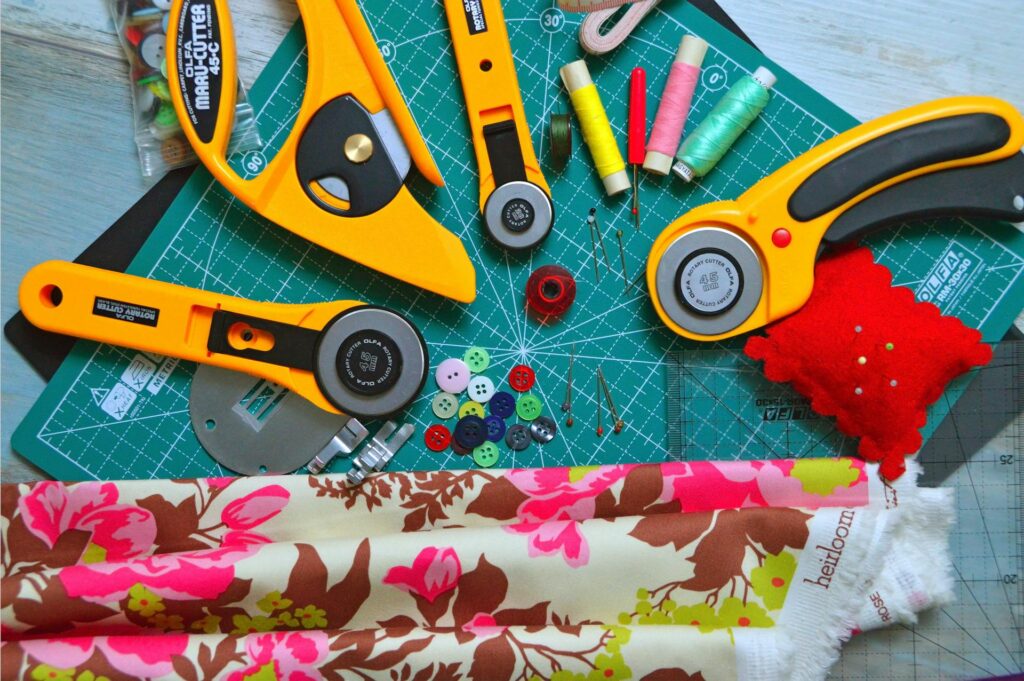
11] Rotary Cutter & Mat
What it is: A sharp, circular blade attached to a handle and a self-healing cutting mat.
Why you need it: While many sewists have these, if you don’t, you’re missing out. They provide incredible speed and precision for cutting straight lines and curves, especially when paired with a quilting ruler.
12] Edge-Stitch Foot / Blind Hem Foot
What it is: A presser foot with a guide in the middle or on the side.
Why you need it: This foot helps you sew perfectly straight topstitching, edgestitching, or apply piping. The blind hem foot has a guide that follows the fold of the fabric, making it almost foolproof to create nearly invisible blind hems.

13] Fray Check
What it is: A small bottle of liquid sealant that dries clear.
Why you need it: A tiny drop on a knot or the end of a cut seam (especially on ribbons or synthetics) prevents it from fraying permanently. It’s a quick fix for securing thread and preventing runs.
14] Loop Turner
What it is: A long, thin wire with a latch hook on the end.
Why you need it: Trying to turn thin spaghetti straps or fabric tubes right-side out with a safety pin is frustrating. This tool hooks the end of the fabric and pulls it through effortlessly.
15] Silk Pins
What it is: Extra fine, sharp pins, often made of stainless steel.
Why you need it: Standard pins can be too thick and leave holes in delicate fabrics like silk, chiffon, or velvet. Silk pins are so fine they slide between the threads without damaging them.
16] Awl
What it is: A pointed tool (not sharp like a needle) used for punching small holes.
Why you need it: It helps guide stubborn fabric layers under the presser foot, opens buttonholes gently, and is crucial for sewing leather or denim where you need to create a starting hole for grommets or thick seams.
17] Clapper
What it is: A simple block of hardwood.
Why you need it: This is the secret to a razor-sharp crease. After pressing a seam with steam, you place the clapper on top and hold it there. The wood absorbs the heat and moisture, cooling the fabric while it is held perfectly flat. Essential for crisp pleats and flat seams, especially in wool.
Ready to Upgrade?
You don’t need to buy all of these at once. Pick one or two that solve a specific frustration you have with your current projects. Investing in the right tool can transform a tedious task into a simple, enjoyable one and elevate the quality of your finished work.

What Should You Buy When You First Start Sewing?
The Absolute Must-Haves: The Starter Kit
These are the non-negotiable items you need to complete your first few simple projects.
1] Sewing Machine:
Your Choice: You don’t need a top-of-the-line computerized machine. A basic, reliable mechanical machine is perfect for beginners.
Key Features to Look For: Straight stitch, zigzag stitch, buttonhole function, and a reverse lever. Brands like Brother, Janome, and Singer are known for great beginner models.
Pro Tip: Consider buying from a dedicated sewing machine dealer instead of a big box store. They often offer free beginner lessons and much better service.
2] Fabric Scissors:
Invest in a good pair of sharp scissors used only for fabric. Using them on paper will dull them instantly.
Size: An 8″ dressmaker’s shears is a great standard size.
3] Seam Ripper:
This is your best friend and most-used tool, especially as a beginner. Everyone makes mistakes, and a seam ripper helps you undo stitches cleanly without damaging the fabric.
4] Pins and a Pincushion:
Pins: Look for glass-head pins. The plastic heads can melt if you iron over them, but glass heads are safe. Longer, sharper pins are best for woven fabrics.
Pincushion: Any kind will do—it just keeps your pins organized and within reach. Many people love the classic tomato with a strawberry emery bag for sharpening pins.
5] Thread:
Quality Matters: Cheap thread breaks, sheds, and causes tension issues. Stick with good quality all-purpose polyester thread (like Gutermann, Coats & Clark, or Mettler). It’s strong and has a little stretch, making it good for both woven and knit fabrics.
Colors: Start with basic neutrals: black, white, and a beige/grey that matches a lot of skin tones (for garments).
6] Fabric Marking Tools:
You need to transfer pattern markings onto your fabric. Tailor’s chalk (which brushes off) or a water-soluble fabric pen are excellent, forgiving choices for beginners.
7] Tape Measure:
A flexible, non-stretch 60-inch (150 cm) tape measure is essential for taking body measurements and measuring fabric.
8] Iron and Ironing Board:
Sewing is 50% pressing! This is the most underestimated but critical tool. Pressing your seams as you go is what makes homemade projects look professional. Any basic iron and board will work.
9] Beginner-Friendly Patterns & Fabric:
Patterns: Look for patterns labeled “Easy,” “Beginner,” or “Learn to Sew.” Companies like Simplicity, McCall’s, and Tilly and the Buttons have great beginner options. Start with something simple like a pillowcase, tote bag, or simple elastic-waist skirt.
Fabric: AVOID slippery, stretchy, or fussy fabrics like silk, satin, or thin jersey knit for your first project.
Start with stable, easy-to-sew woven cottons like quilting cotton, poplin, or canvas. They are inexpensive, come in endless prints, and are very forgiving.

The Next Tier: Very Useful Add-Ons
Buy these after you’ve completed a project or two and are sure you want to continue.
1] Rotary Cutter, Mat, and Acrylic Ruler: A game-changer for cutting long, straight lines quickly and accurately. Essential for quilting, but also fantastic for garment sewing.
2] Measuring Gauge: A small 6-inch metal ruler with a slider. Perfect for measuring hem depths, buttonholes, and checking seam allowances.
3] Point Turner & Creaser: A wooden tool that helps you poke out corners (like on a collar) sharply and press seams open without burning your fingers.
4] Hand-Sewing Needles: For finishing touches like sewing on buttons, hand-hemming, and basting.
5] Fray Check: A liquid seam sealant that stops cut fabric edges from fraying.
What You DON’T Need Right Away
Don’t get sucked into buying these until a specific project calls for it:
1] A serger/overlocker: While great for finishing seams on knit fabrics, you can do a huge amount with just a zigzag stitch on a regular machine.
2] Specialty Pressing Tools: (Sleeve rolls, ham, etc.) You can get creative with towels for now.
3] Every single presser foot: Your machine will come with a few basics (zigzag foot, zipper foot). Learn to use those first.
4] A giant stash of fabric: It’s tempting, but buy fabric for specific projects as you go. Tastes change, and fabric can languish unused.
Quick-Start Shopping List
Take this to the store:
– Basic Mechanical Sewing Machine
– 8″ Fabric Shears (for fabric only!)
– Seam Ripper
– Glass-Head Pins & a Pincushion
– All-Purpose Thread (Black, White, Beige)
– Tailor’s Chalk or Water-Soluble Fabric Pen
– Flexible Tape Measure
– Iron & Ironing Board (you might already have these)
– A “Beginner” Sewing Pattern
– 1-2 yards of Quilting Cotton or Poplin
Start with a simple, satisfying project. A pillowcase or a tote bag is perfect because you get a finished product quickly, which builds confidence! Happy sewing.
Related Reading
8 Little Sewing Secrets That No One Tells Beginners
The Ultimate Guide to Choosing the Right Needle and Thread
How to Save Money on Fabric and Supplies
Common Sewing Mistakes and How to Avoid Them
How to Cover Up Sewing Mistakes